La Paz is one of the most arid cities in Mexico. It depends on the very storms that destroy it to replenish its aquifer. This portfolio documents over a decade of work at the intersection where science, visual design, and multi-actor facilitation meet — and where narrative becomes the infrastructure that makes systemic change hold.
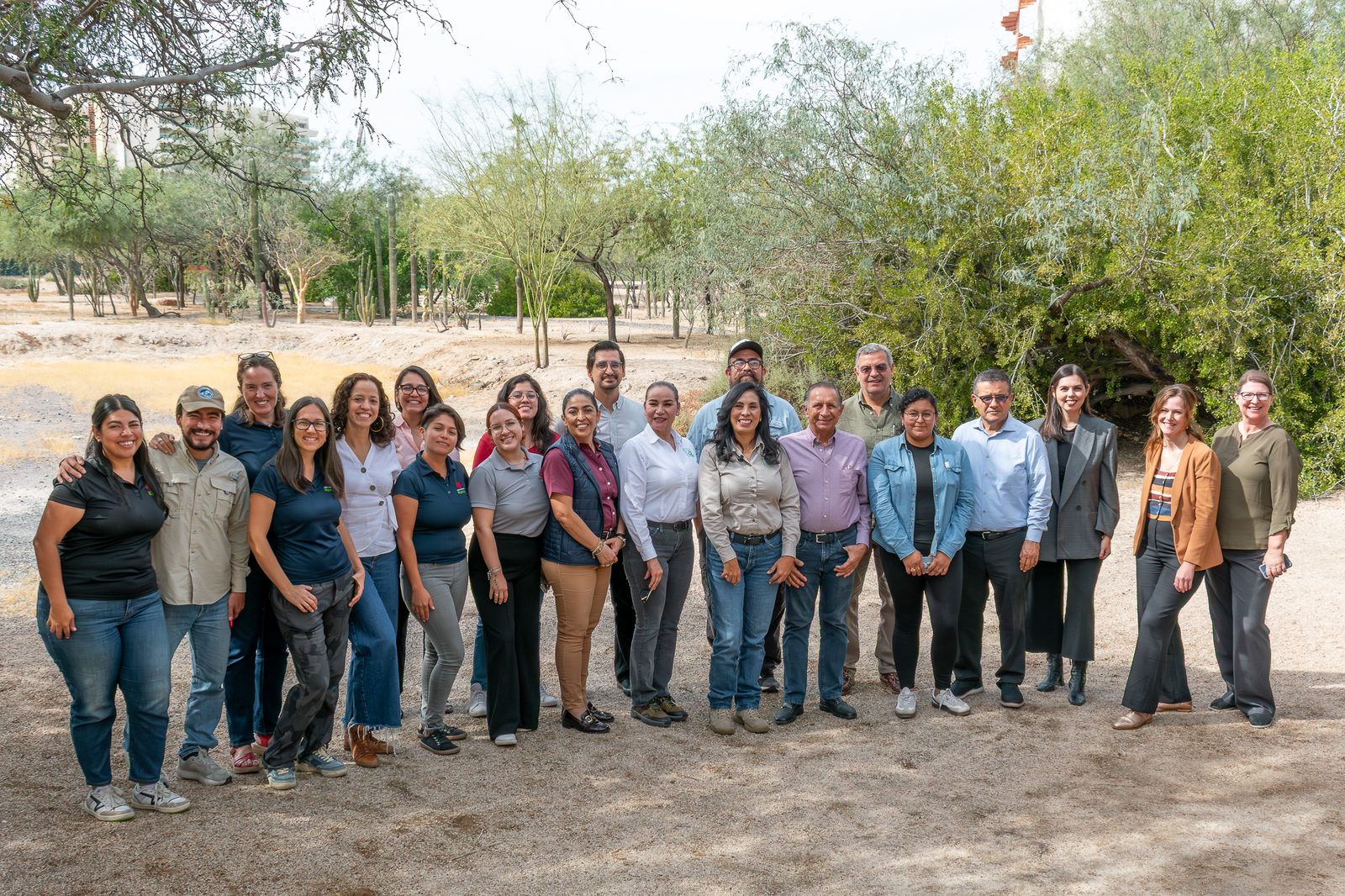
Water Resilience Workshop · December 2, 2025
About me.
Marine biologist. Graphic designer. Water governance leader.
Living and working in La Paz long enough to know what the city needs — and what kind of story it has yet to tell.
I came to La Paz twenty-three years ago because I fell in love with this place. A paceña by choice — that is what they call someone from La Paz who chose it rather than was born into it. In these twenty-three years I have built two things here: a personal web of friends, neighbors, family, and community that has become part of who I am; and a professional network of colleagues and institutions through which I have done the work that has given me a deeper purpose — that La Paz remains a city capable of sustaining its beauty, its livelihoods, and the life it offers over the long term.
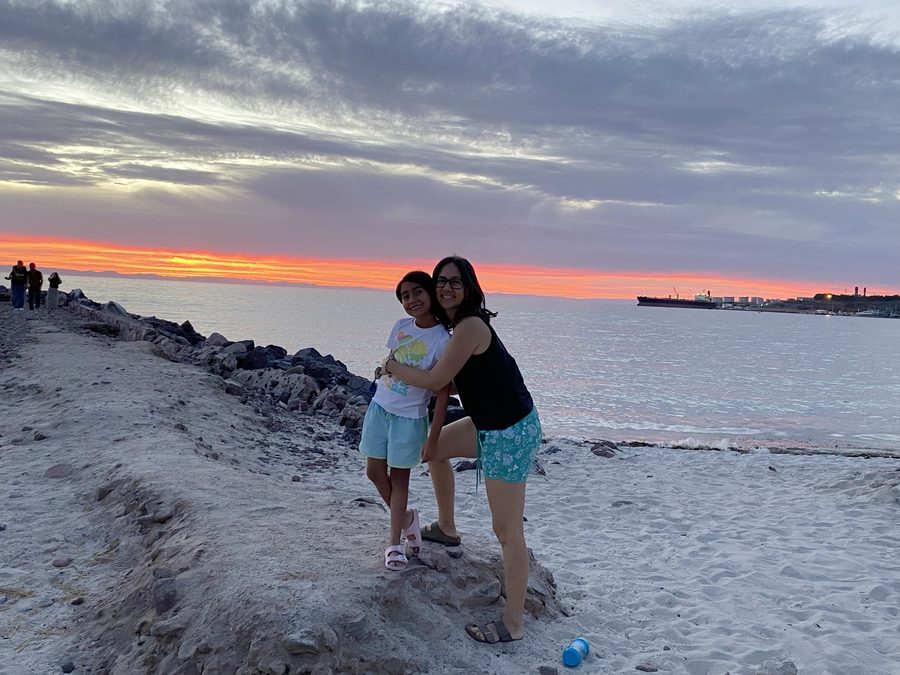
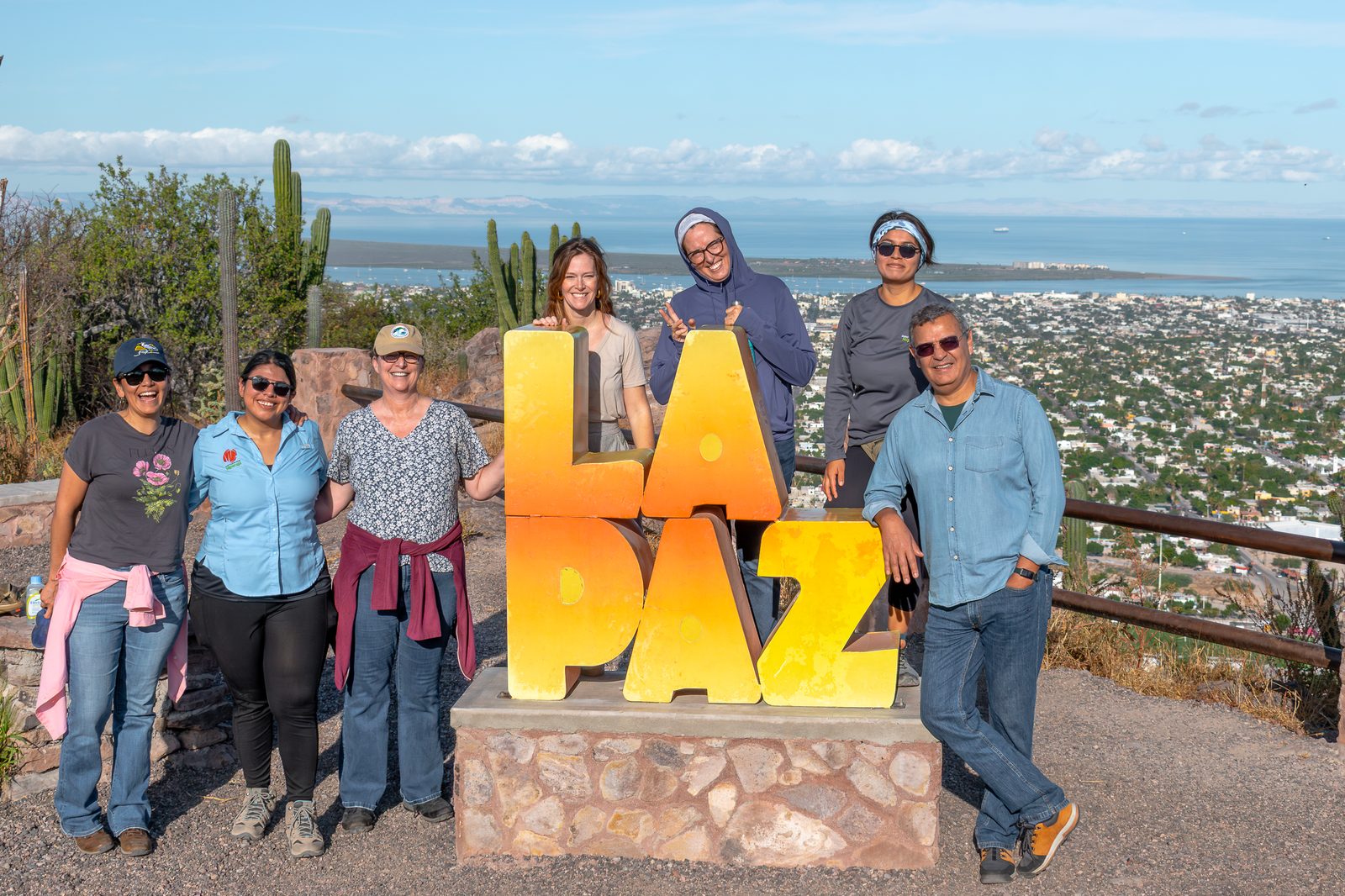
Today, as Director of the Water and City Program at Niparajá A.C. and President of the Municipal Water Advisory Council, I work at the place where science, design, and governance converge — facilitating the multi-actor processes that translate shared understanding into sustained action. La Paz is where my daughter Julieta and I call home. Raising her here has expanded the ways I know this city; through her I have come to inhabit other corners of La Paz — neighborhoods, parks, public spaces, the places that quietly hold a city together.
Photo: Indira
The longer story
Design, biology, and a sea I had seen in a documentary
I fell in love with graphic design first. Graphic design gives me a language without words — a way to transmit emotion, ideas, beauty, complexity. But I had also always loved animals and landscapes with an intensity that design alone could not contain. A trip to the Rocky Mountains, while I was completing my undergraduate degree in graphic design, made it clear: my contribution to the natural world could not rest on design.
I decided to study marine biology. I moved to La Paz — a place I had seen in a documentary and decided I needed to know — and fell so deeply in love with the science that I went on to a master's in marine ecology at Auckland University of Technology in New Zealand. I had given my life to science, convinced that having and sharing the right information could save animals. And then, during my master's, I began to understand something that no study could fully explain: change does not move on information alone.
Avatar, fishing communities, and the lesson that changed everything
Strange as it sounds, Avatar showed me why science alone was not enough: protecting ecosystems means working with the whole system, its parts and the web between them. So I turned to communities and to tools that recognize each of us lives a different reality; and that our differences and connections shape what we can change, alone and together.
The second shift came at NOS Noroeste Sustentable, my first NGO, working alongside fishing communities in Baja California Sur. There I met Peter Senge and a library of tools for understanding how people actually work together — how we listen and how we don't, the mental models we act from, the way we perceive and misread each other's realities. The goal, I came to understand, is to build shared vision. But before any vision can be shared, we have to recognize that each of us comes from a different reality — different security, different family ties, different access to basic services.
"You do not save the world by convincing people they should want to save it. That is too easy a story, and it does not hold. What you can do is understand what they already want; and find where their priorities and others' meet. Without that step, nothing else moves forward."
Into the water world
When I joined Niparajá A.C., it was not the political complexity of water governance that called to me first. What pulled me in was green infrastructure: working with communities to design public spaces that also infiltrated water, restored native vegetation, and recovered ecosystem services. It was concrete, visible work — you could see it, touch it, measure it.
From that grew research, technical publications, and multi-actor processes. Among them, the Plan de Acción para el Manejo Integral de la Cuenca y el Acuífero de La Paz (PAMIC La Paz) — a process that brought together many of the institutional actors who still shape this work today. Recognizing the strategic need, I stepped up to propose and lead the Water and City Program. Embracing this role meant confronting something new: working in political spaces — a system with profound complexity, but also, I came to see, with profound potential for impact.
The question that became a project
Niparajá's board recommended I join the city's water utility advisory council as its President — a role that had historically been held by water technicians. I was elected unanimously. I was the first woman, and the first person from civil society rather than the water technical sector, to hold the position. The political world was genuinely new territory for me. Before saying yes, I sat with one question.
What I brought — and what had not been done before — was strategic leadership: creating an environment of trust where every member could express their interests openly; building common goals; and determining what the council would prioritize and advance during our mandate. With this, the council is moving from procedural meetings into coordinated action. My mandate as President ends in approximately one year. I plan to use the time I have left to leave the conditions in place for the Water Resilience Action Strategy to be adopted institutionally.
"What can I bring to this room that is different from what is already here?"
Communication as infrastructure
From inside the council and the utility, I have learned to see what makes institutional change so hard: the limits of human resources, the daily operations that consume strategic time, the political will that rarely matches the long-term scale of the problem.
Instead of trying to convince others of what I believe is best, I look for what I call el "y a mí qué" del otro — what is genuinely in this for the other side. Communication is, for me, the central tool of this work. Within communication, storytelling is the instrument I return to most. A story does not give people new information — it gives the information they already have a reason to matter: a face, a consequence, a moment of recognition.
"A good story alone does not save a city. La Paz already has technical analyses, dedicated institutions, willing actors, and the seeds of the right alliances. What it does not yet have — and what the work ahead provides — is the narrative that lets all of that hold together."
Core competencies
Multi-actor governance and facilitation
Visual storytelling and creative direction
Design and editorial production
Marine biology and integrated watershed science
Systems thinking and collaborative process design
Leadership and team management
Institutional management, fundraising and budgeting
Data analysis, databases, and financial administration
Conflict navigation
Bilingual fluency in Spanish and English
"My ultimate goal is to cement these participatory models into permanent public policy, ensuring that La Paz becomes a blueprint for coastal desert resilience in Latin America."
Selected work.
Each project began with a question about why change was not moving — and what kind of story, map, space, or alliance might help it move. The work spans animated characters and governance tables, causal loop diagrams and wetland restoration, advisory councils and community workshops.
What connects them is a single conviction: that the gap between what we know and what we do is almost always a communication gap.
Projects — select to explore
Project 01 · Animation · Civic campaign · Communication design
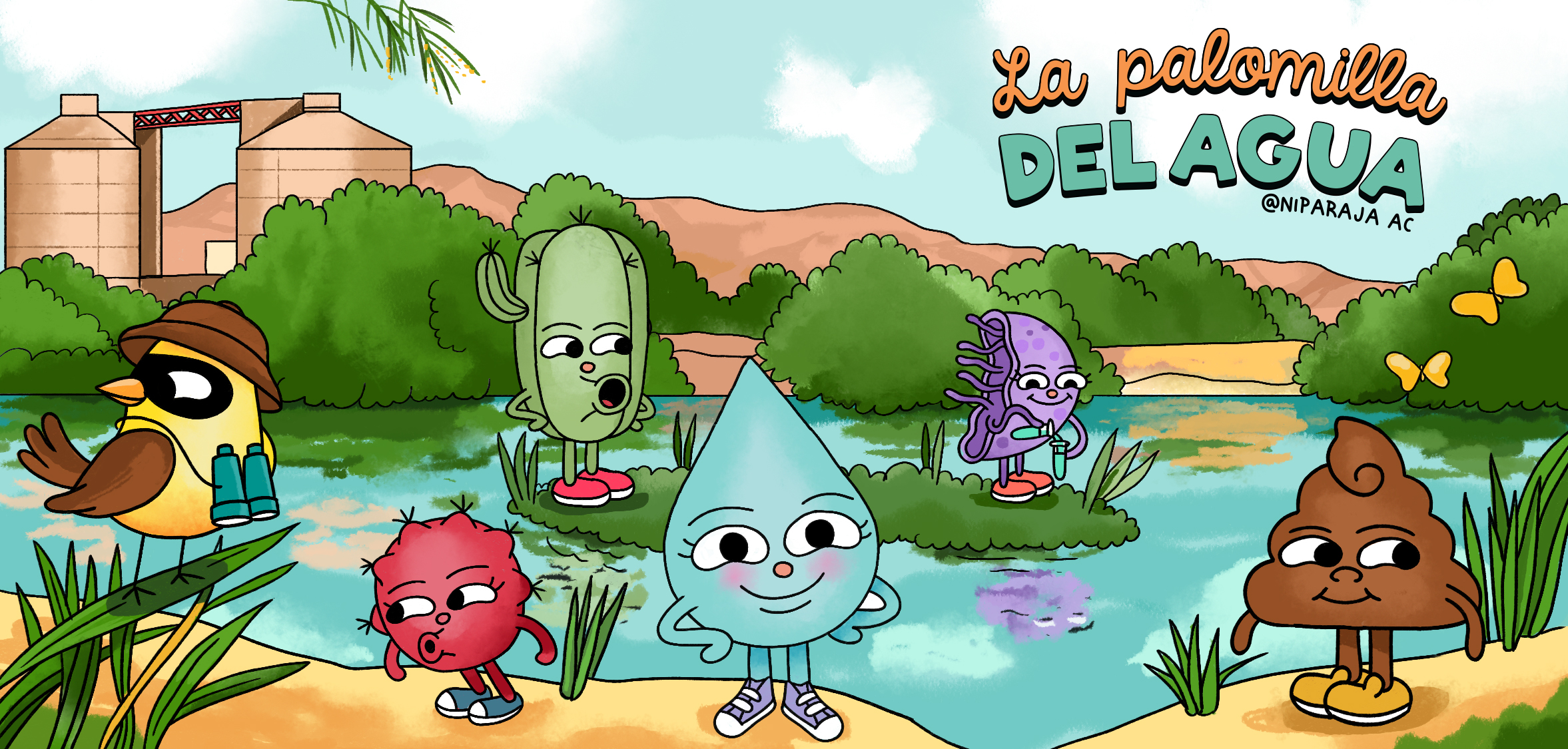
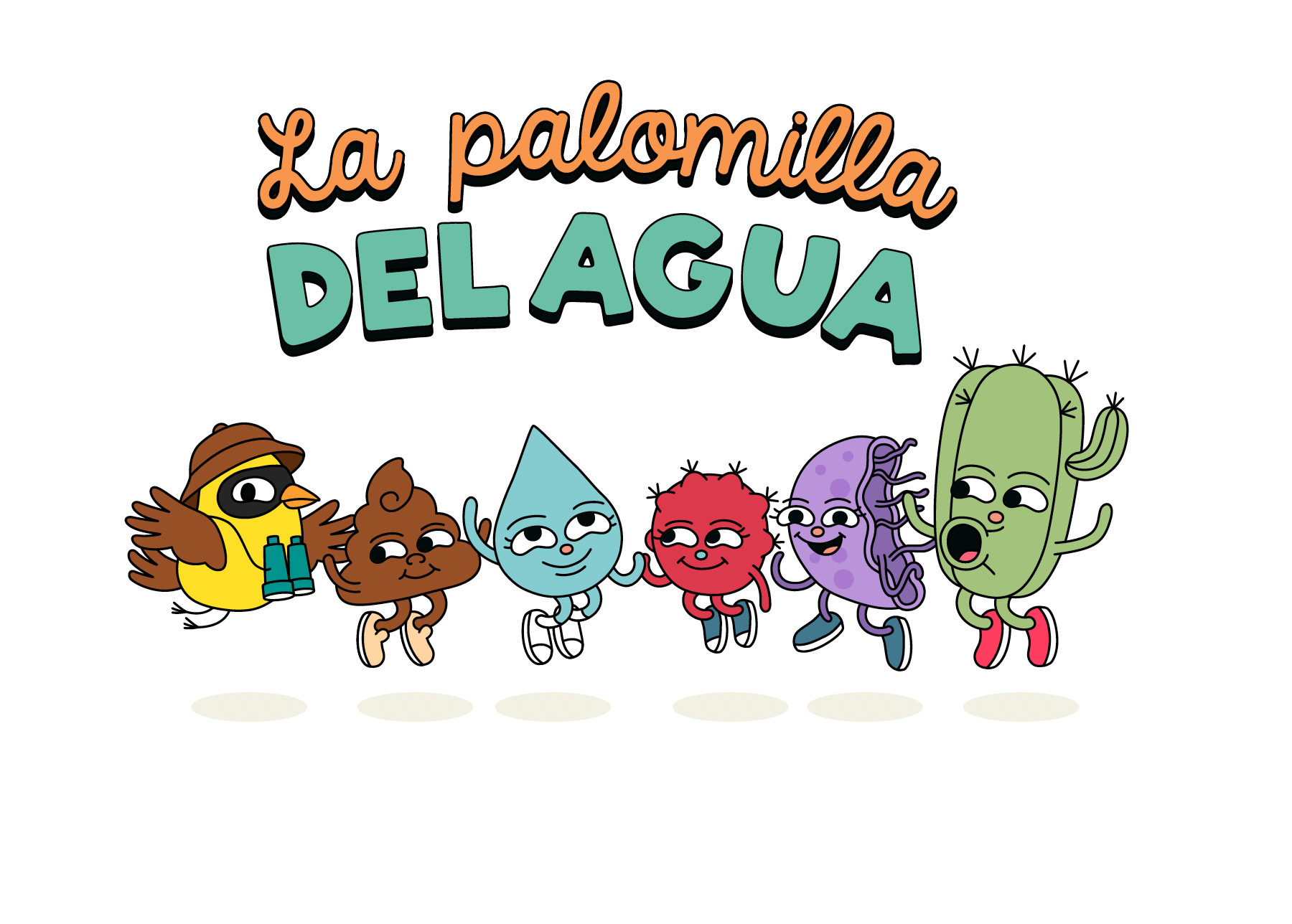
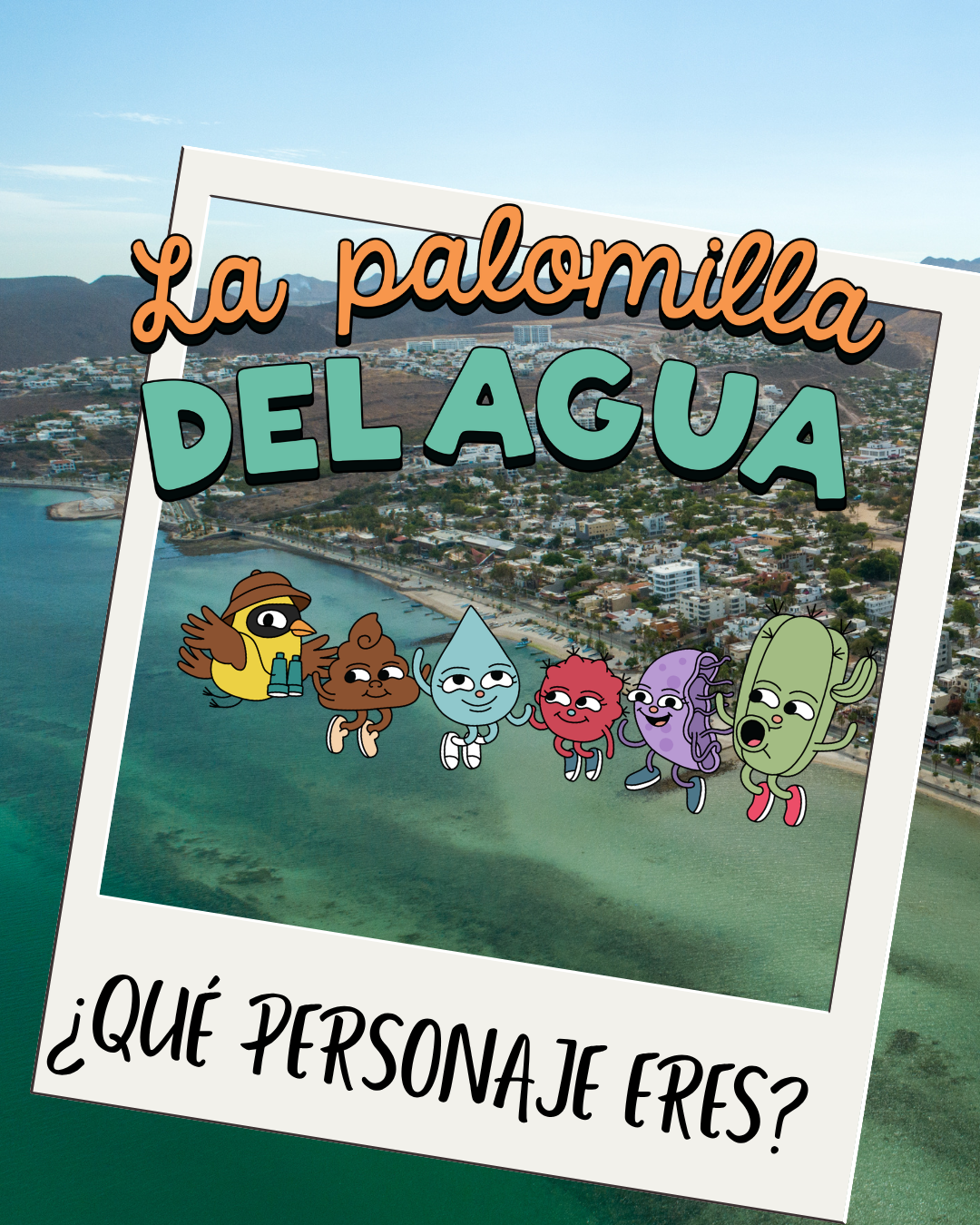
La palomilla del agua and Other Characters.
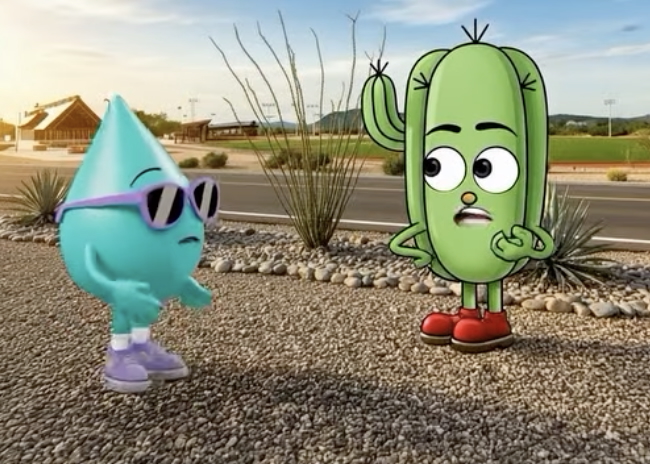
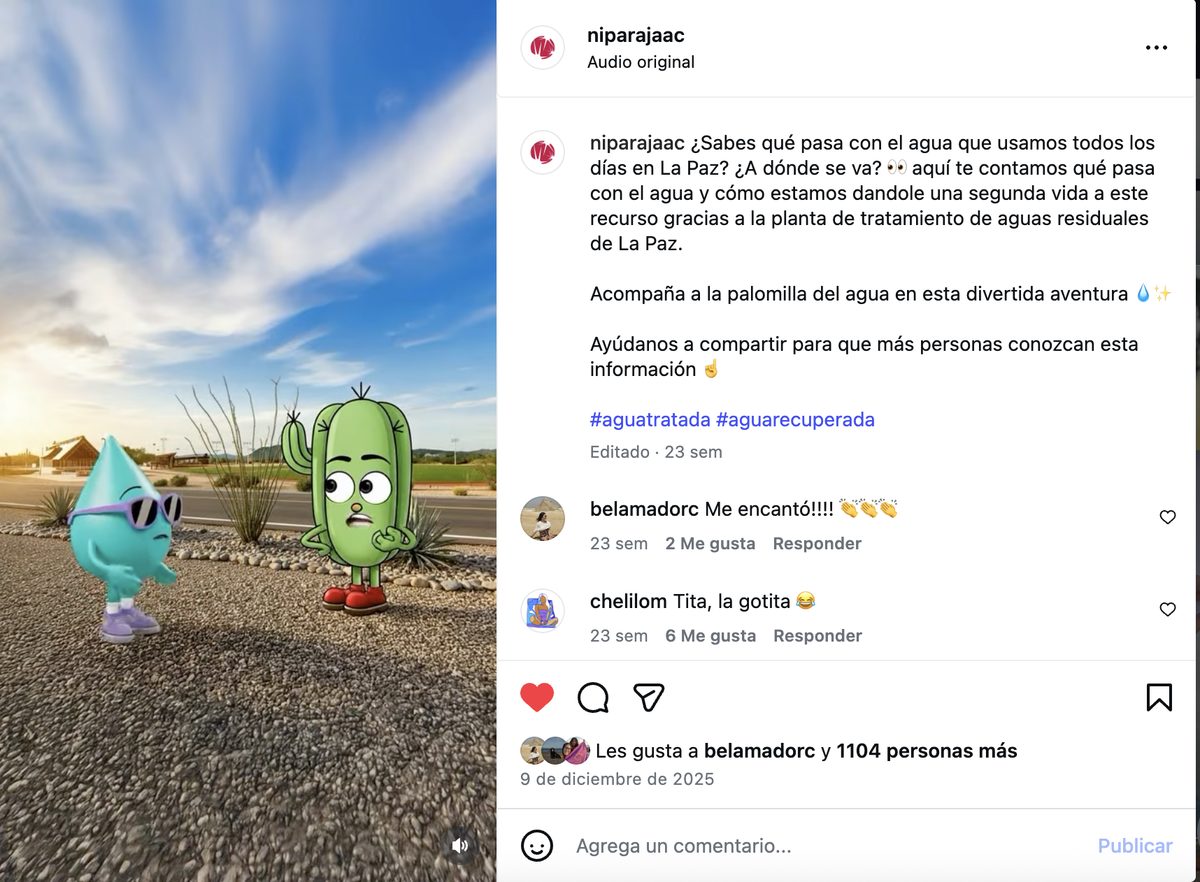
An animated series and civic campaign that uses culturally resonant characters, local slang, and humor to transform how the city of La Paz talks about water scarcity and sanitation — achieving widespread acceptance through a deeply local approach. The most successful episode reached over 70,000 organic views on Instagram and Facebook, nearly a quarter of La Paz's total population.
The challenge: Breaking the environmental cliché
To address La Paz's severe water stress and the often-taboo topic of wastewater management, we needed a narrative that felt profoundly local. Typical, solemn environmental messaging was no longer working. People were tired of being lectured. We needed a strategy that bypassed resistance, sparked immediate empathy, and allowed the community to see their culture reflected in the story.
Creative rationale
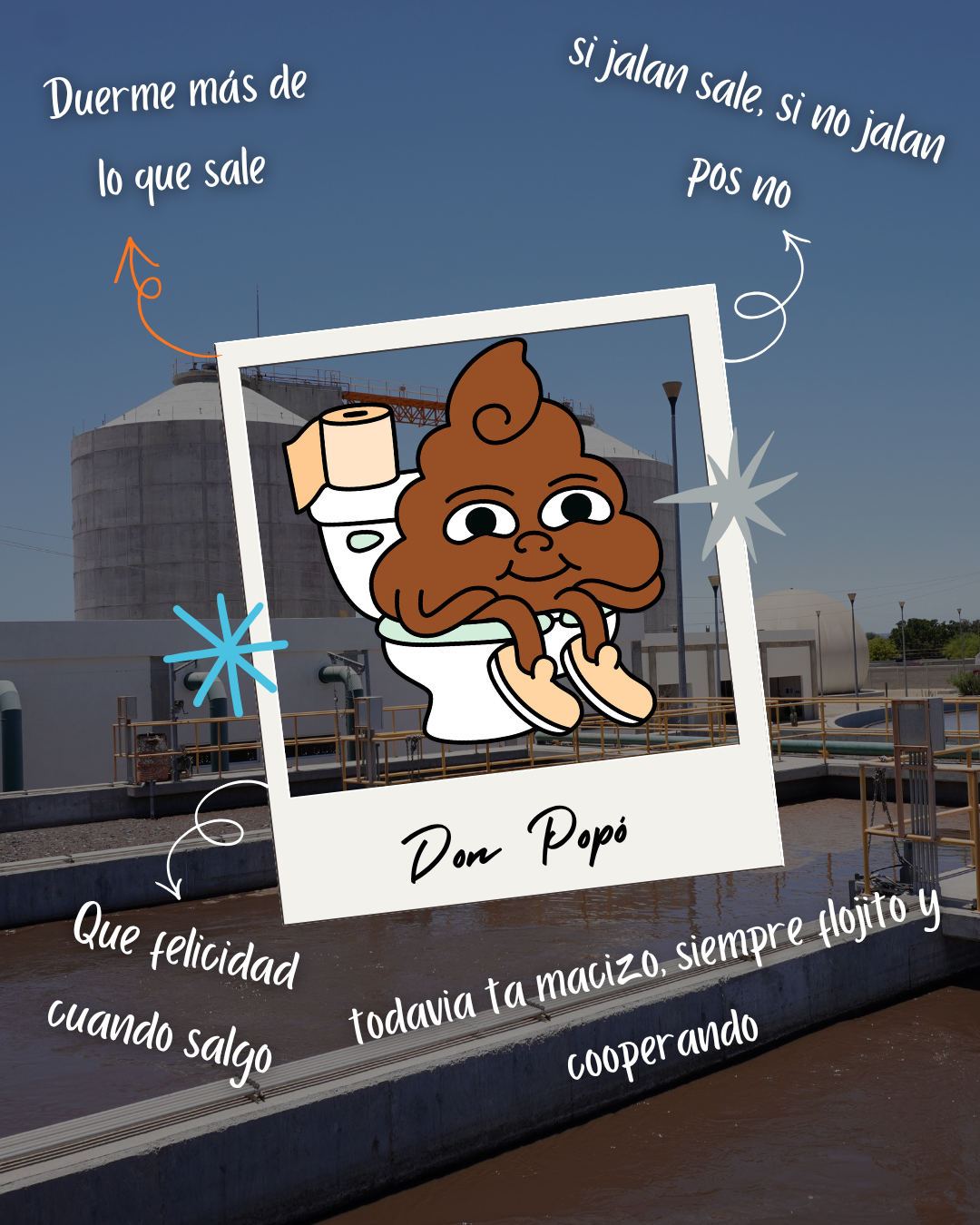
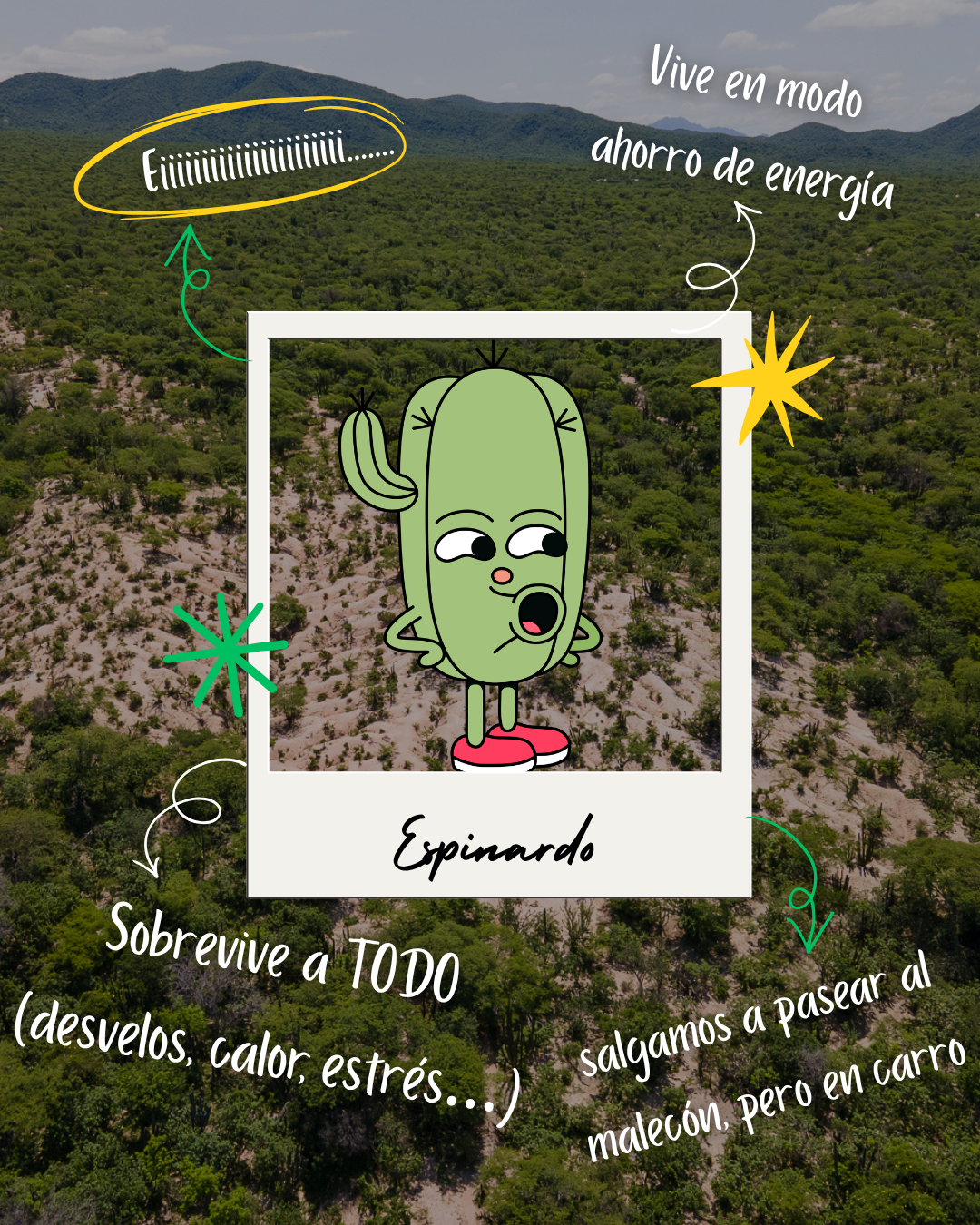
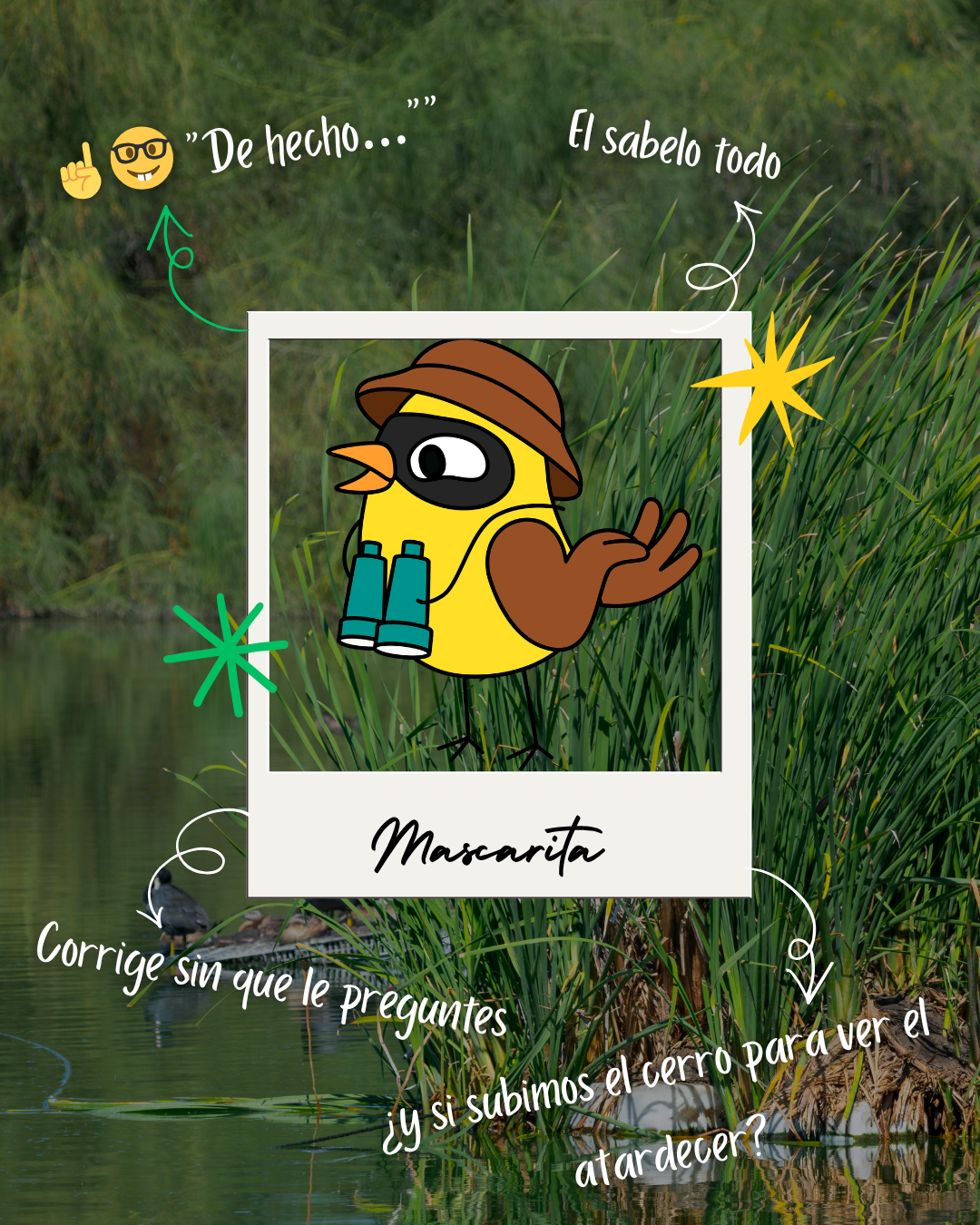
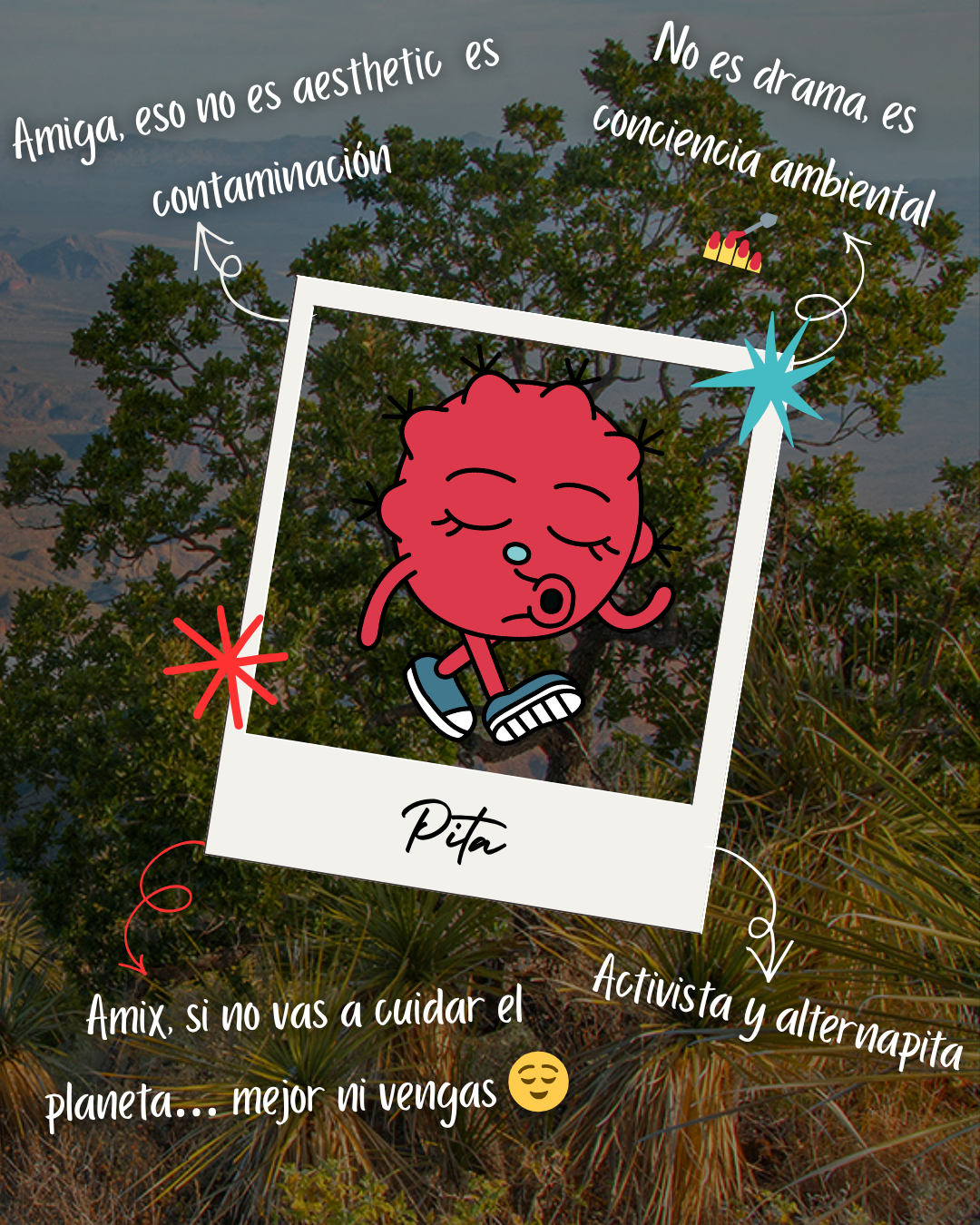
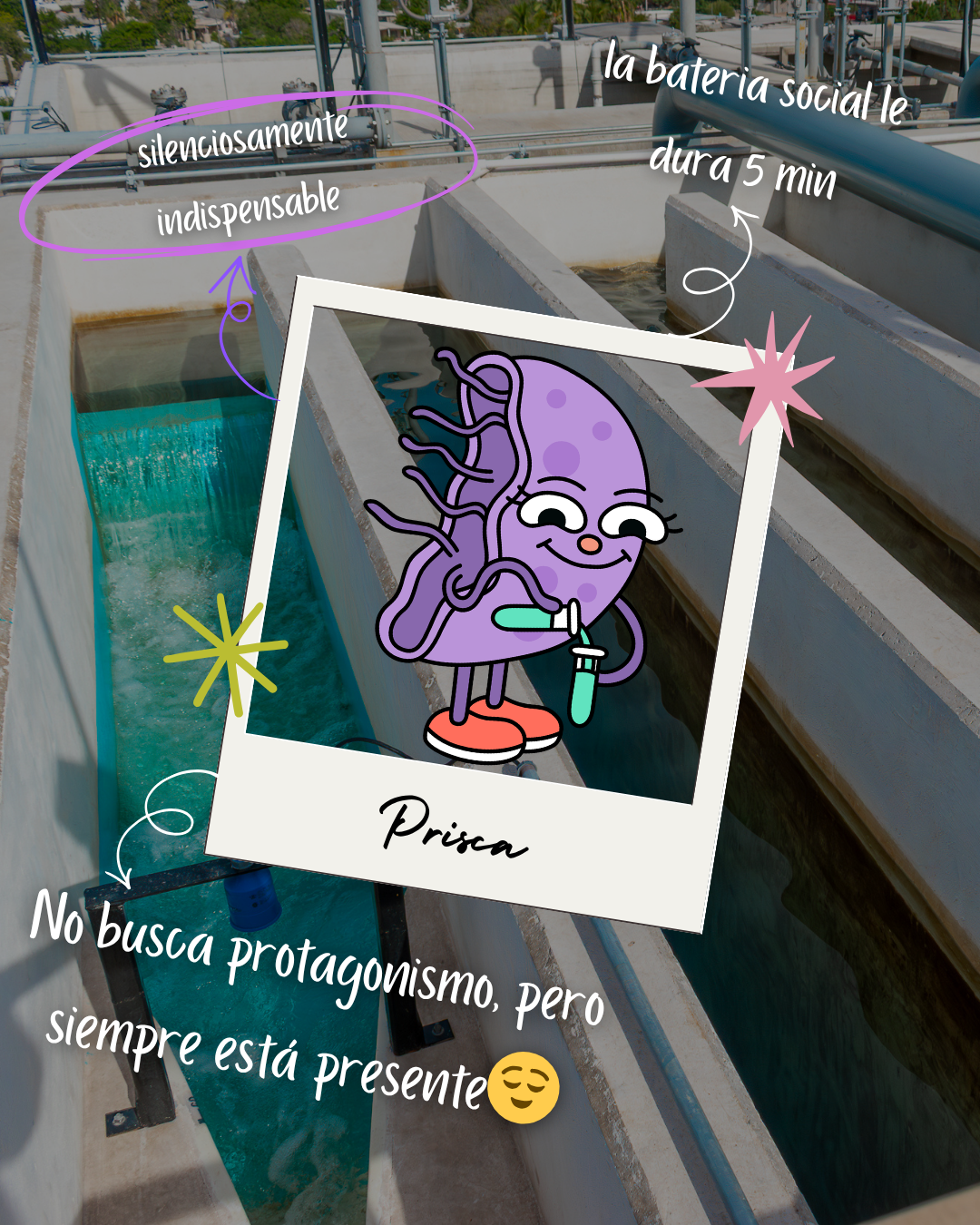
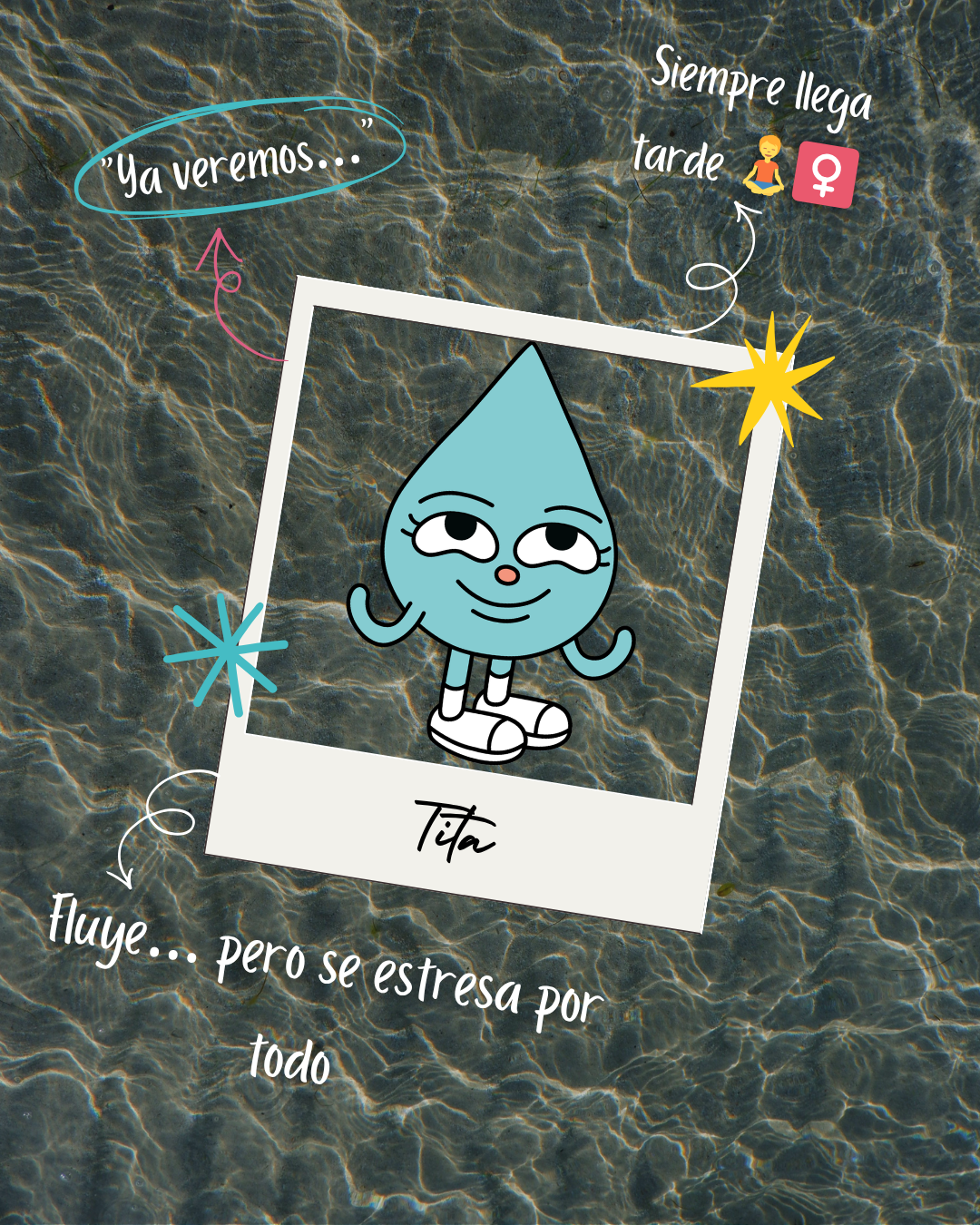
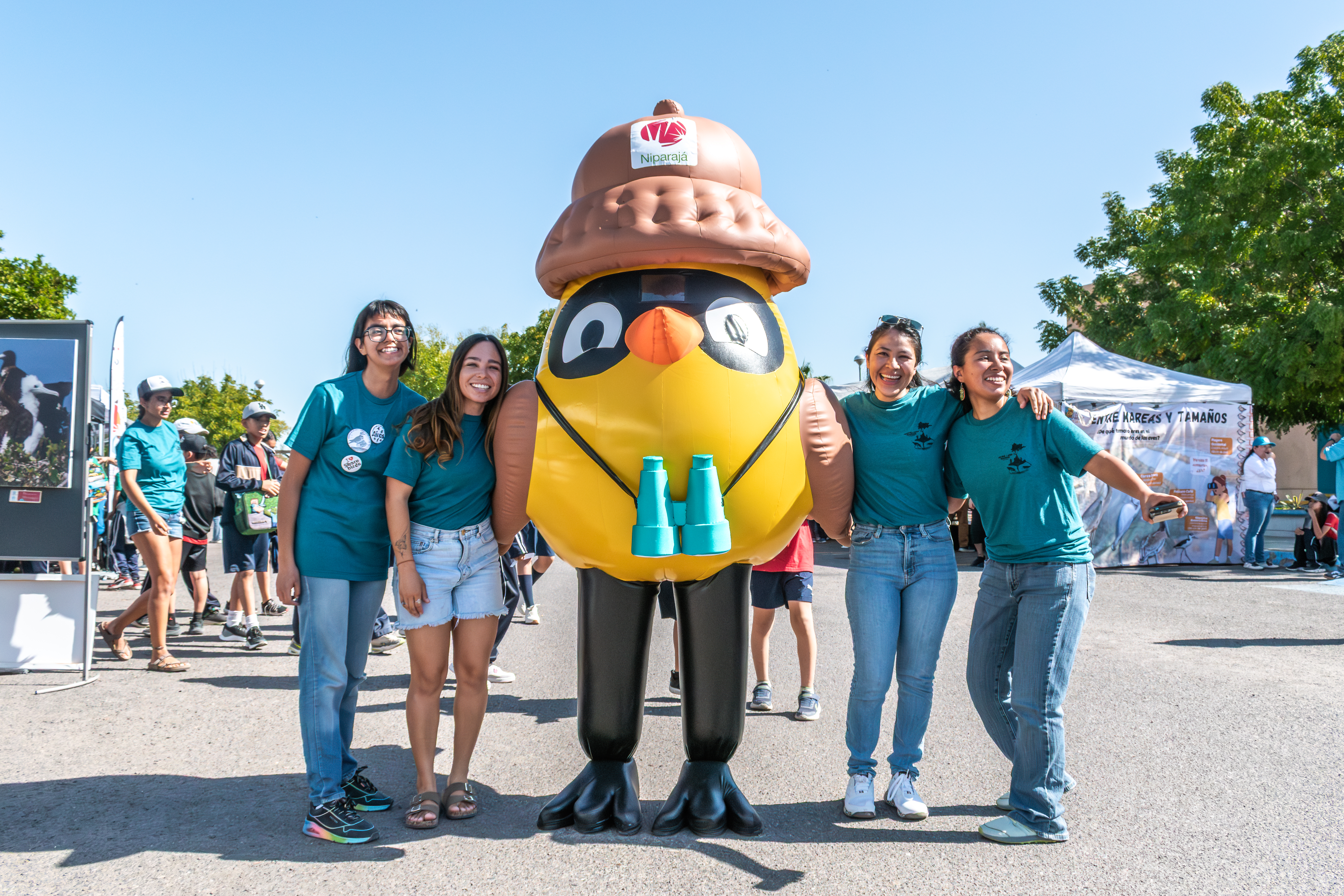
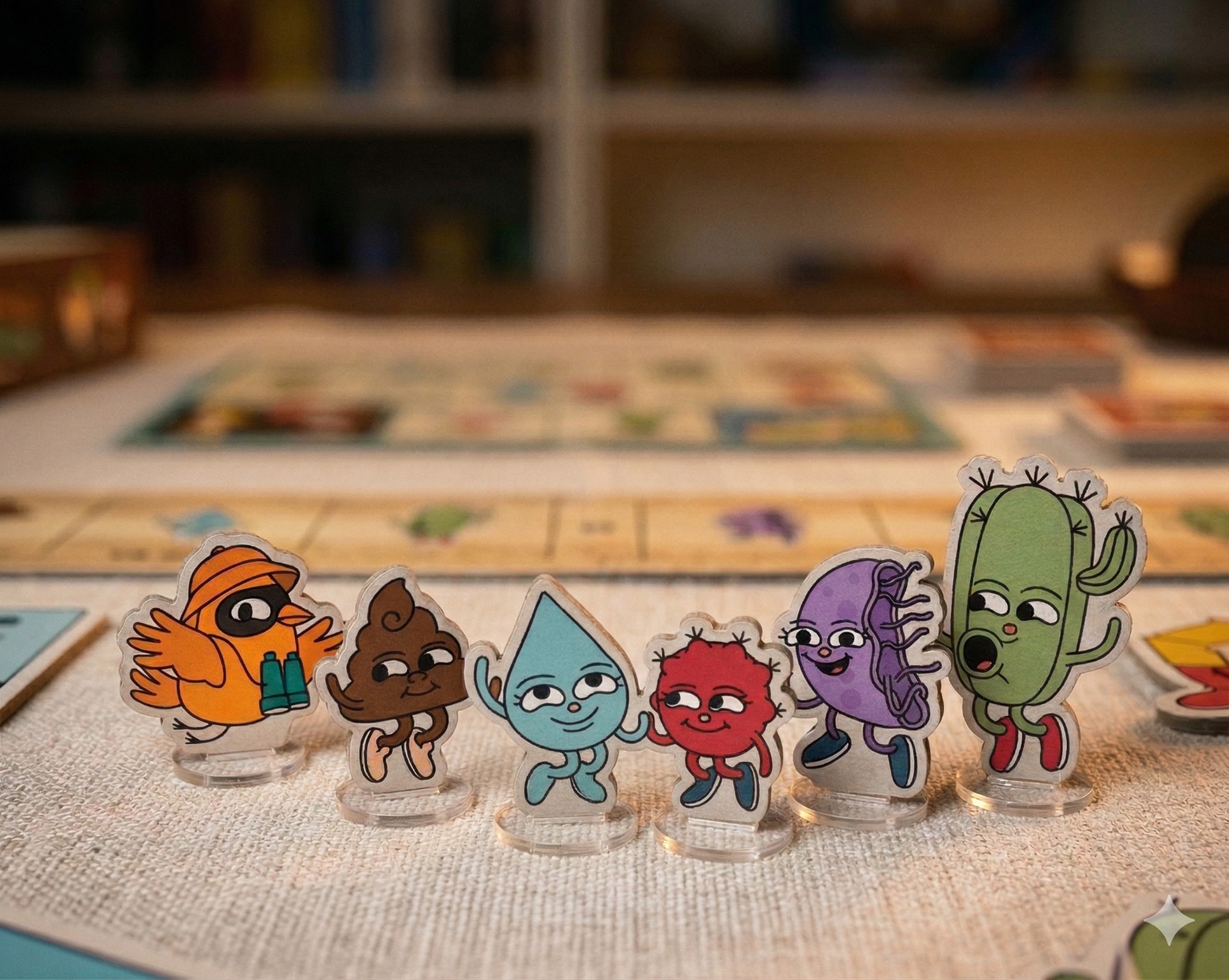
La palomilla del agua began with two characters created by a designer for an earlier campaign. I took on the creative direction, expanded the cast, and developed the full communication strategy. Each character was designed with intention: Pita — the resilient desert pitaya — wears traditional huaraches. Mascarita is inspired by the Peninsular Masked Yellowthroat, an endemic bird. Don Popo lets us talk about sanitation without stigma. And Prisca — based on Aspidisca, a microorganism that clarifies water — brings the invisible world of water quality into plain sight.
1 / 8
Animated series: Massive engagement through local storytelling
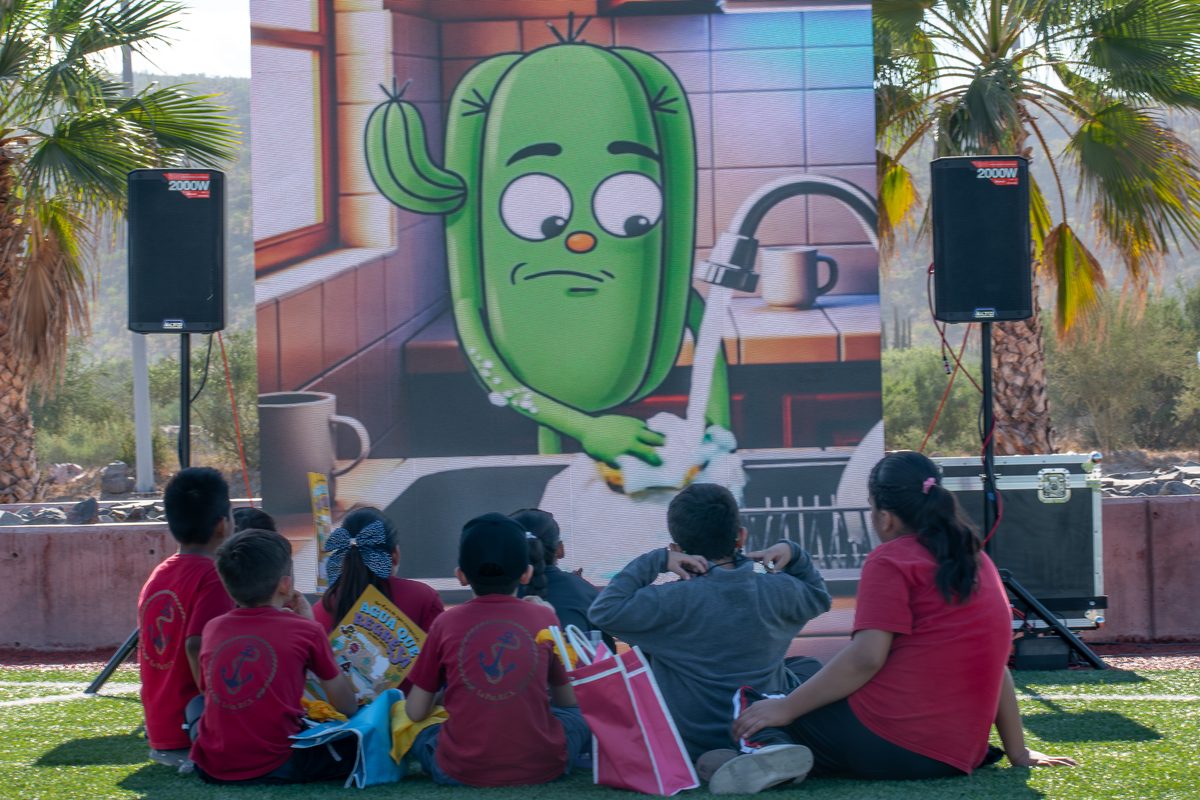
A three-part animated series built using distinctly paceño visual elements, addressing water issues in a fun, informative, and culturally relevant way. Co-created with academia, civil society organizations, the municipal water utility, and the state water commission. The most successful episode reached over 70,000 organic views on Instagram and Facebook.
Community screening — children watching La palomilla del agua on the waterfront
1 / 2
Taking it to the streets: Characters as civic communication
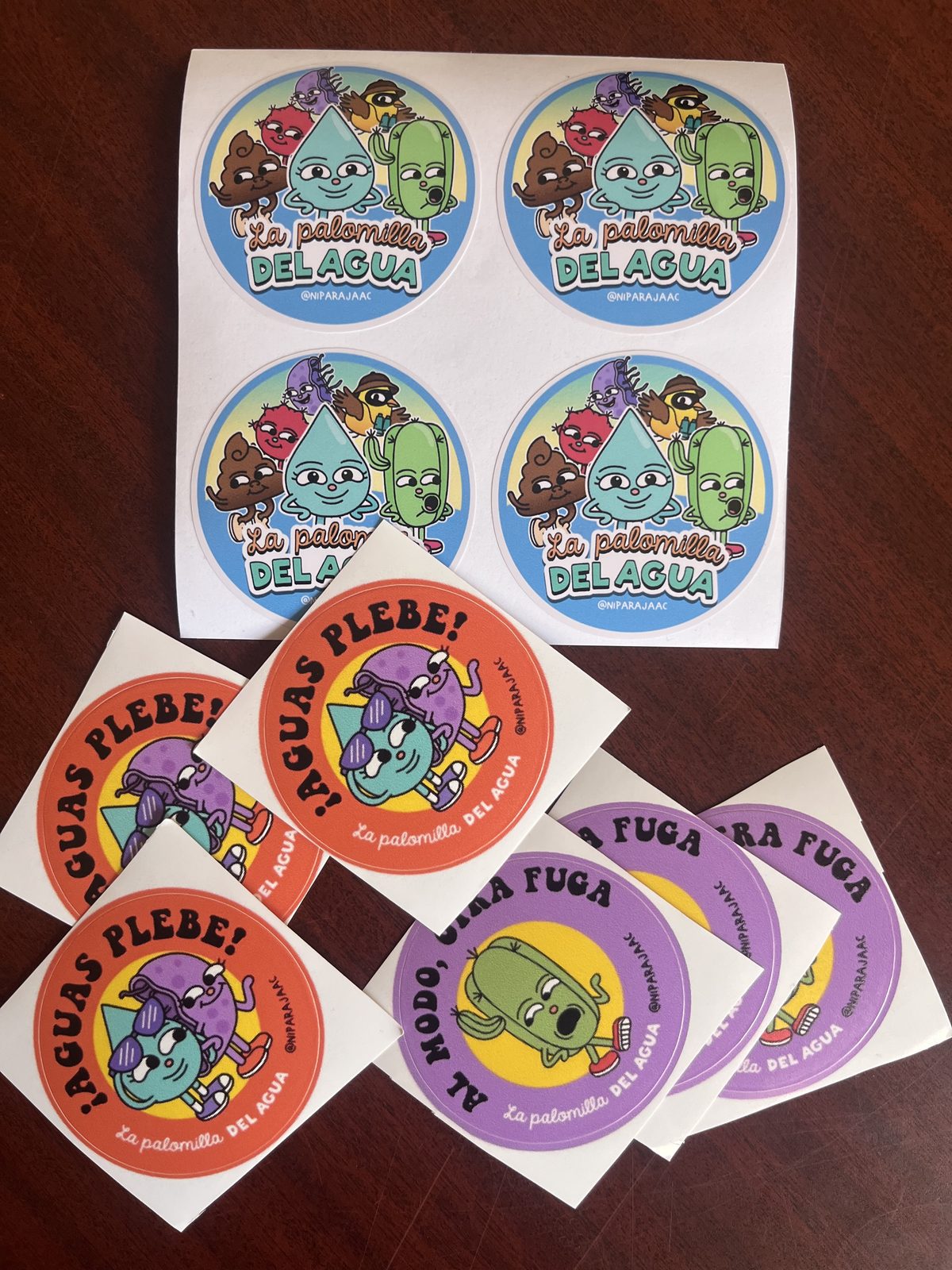
A collection of character decals featuring local slang turned everyday citizens into active carriers of the message — placing the characters on laptops, water flasks, and car bumpers across the city. Simple and tangible, the stickers travelled where formal campaigns never could.
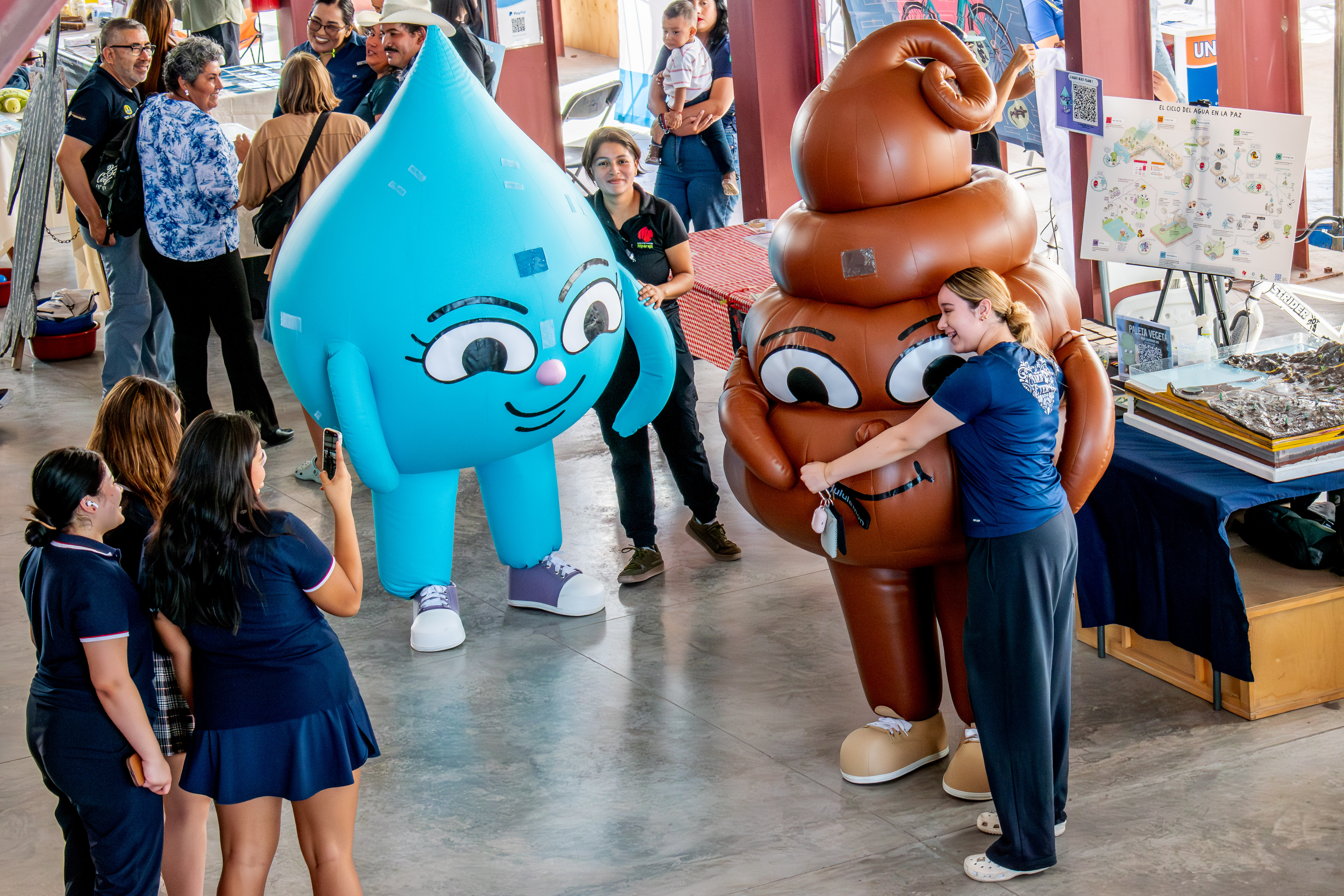
Three of the characters also came to life as full-scale mascot costumes — botargas — that interact directly with the public at events and public spaces, bringing the palomilla crew into playful, face-to-face encounters with the community.
Character stickers — distributed across La Paz
Botargas — characters meeting the public at events and open spaces
Botargas — bringing the characters face-to-face with the community
1 / 3
Communication materials: Physical tools for a complex system
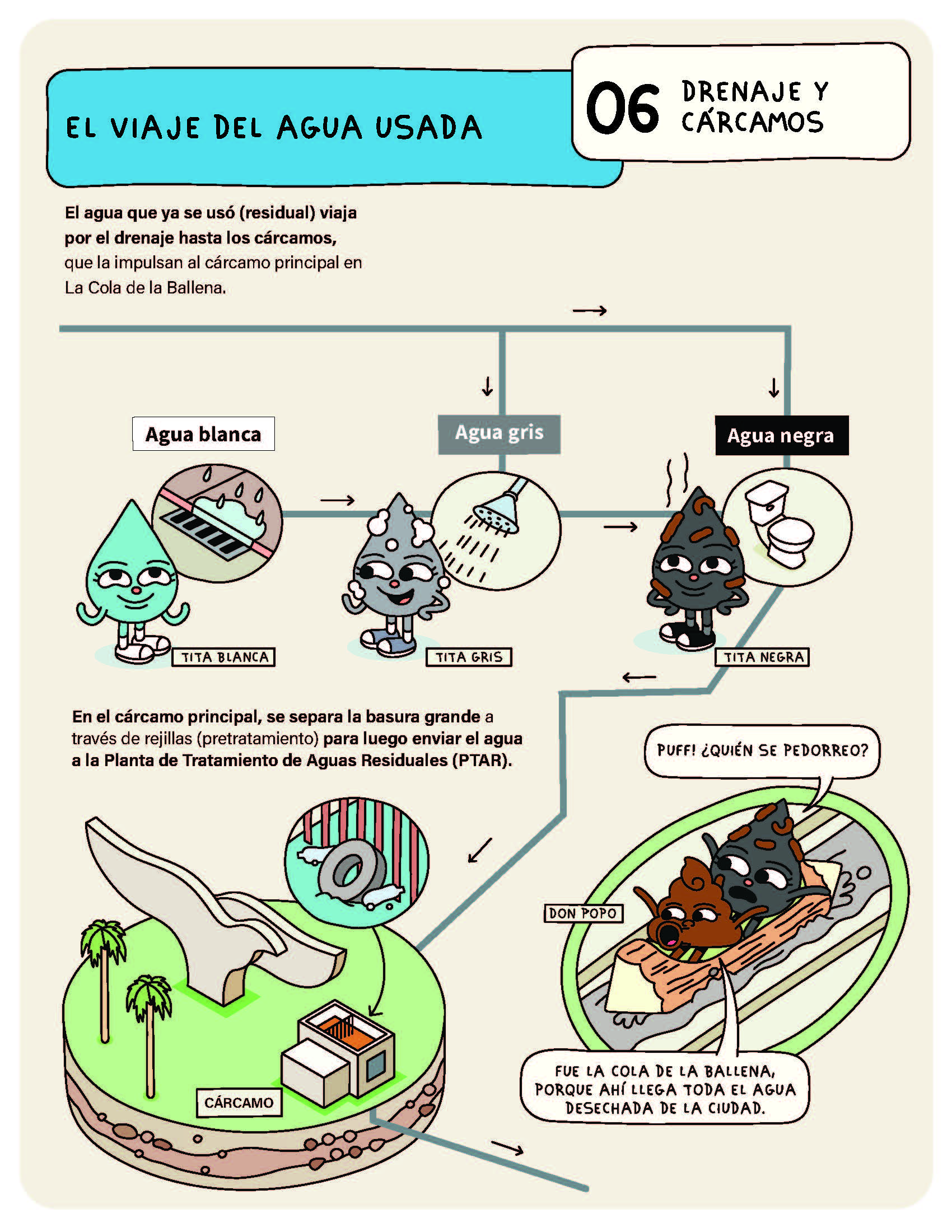
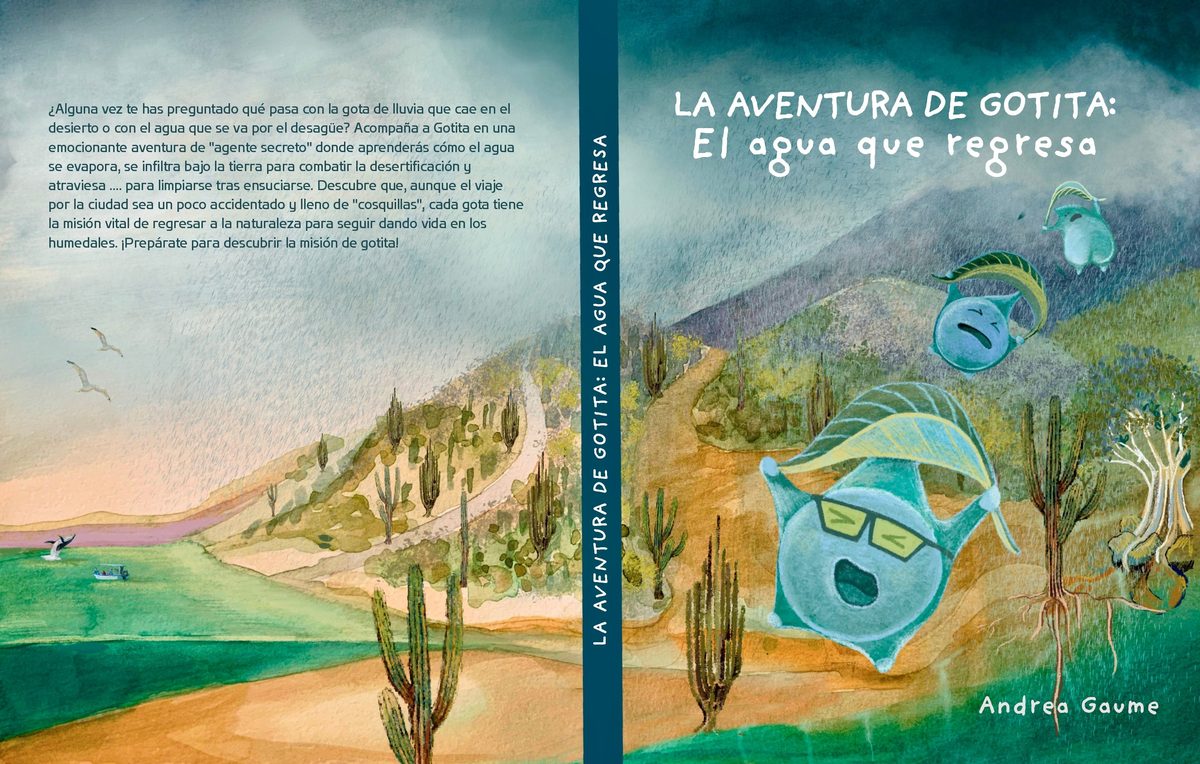
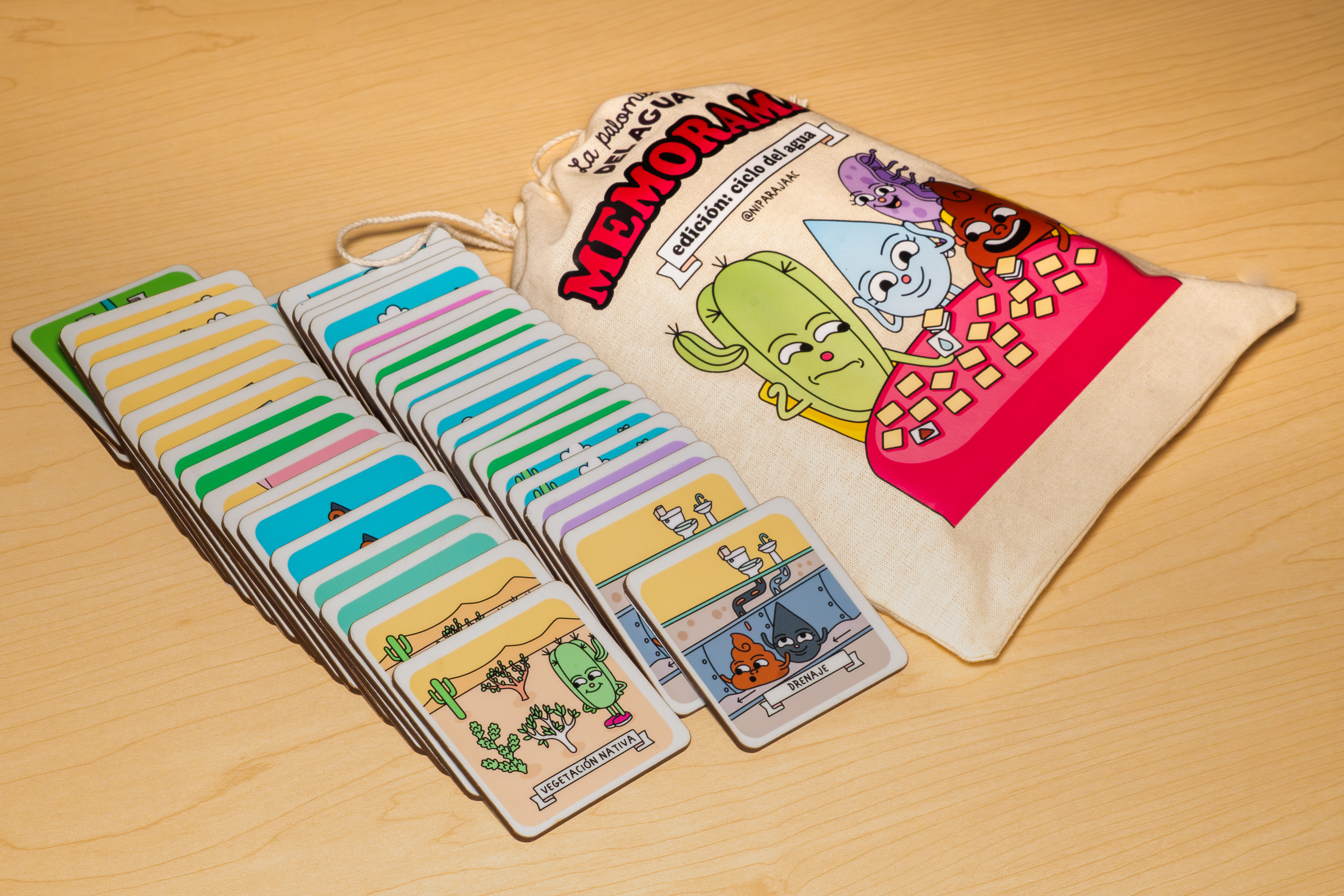
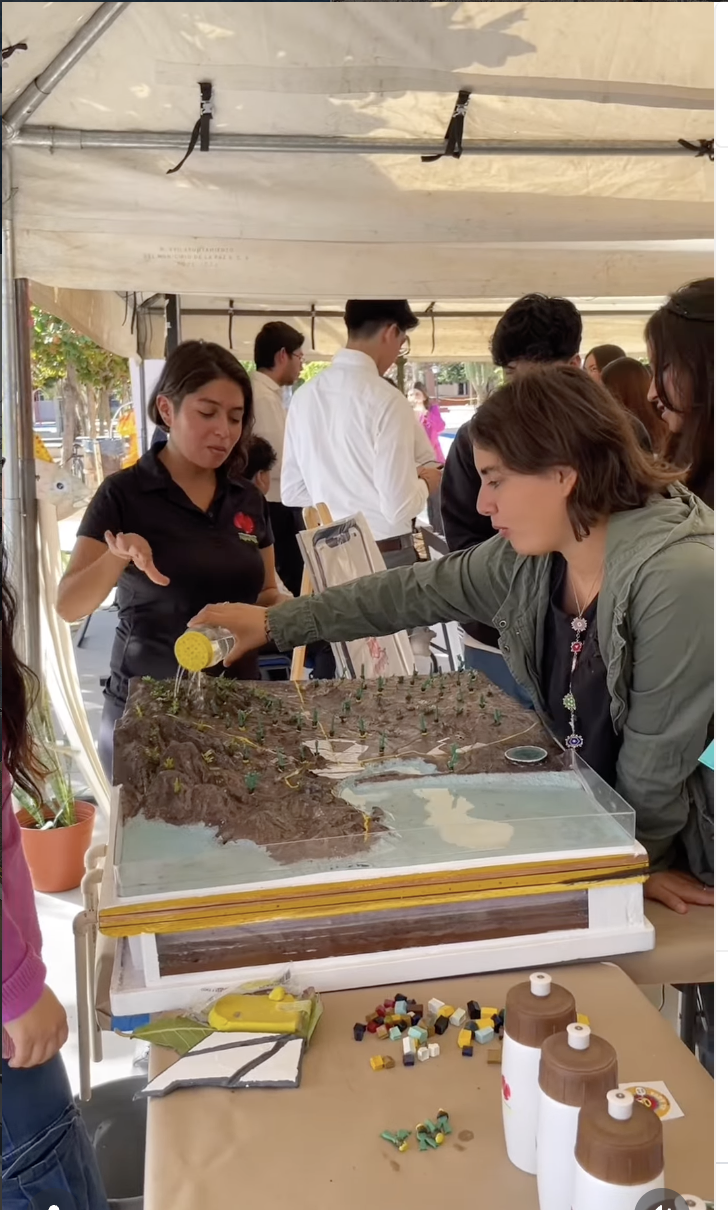
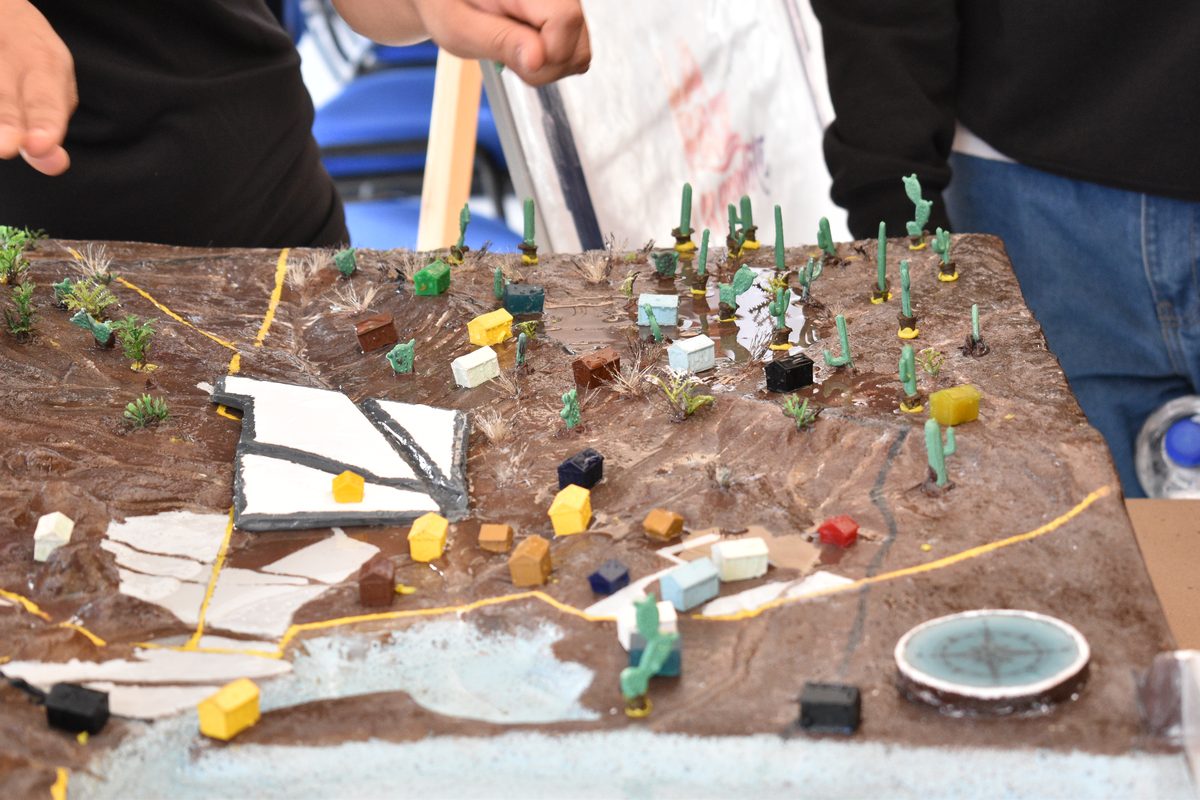
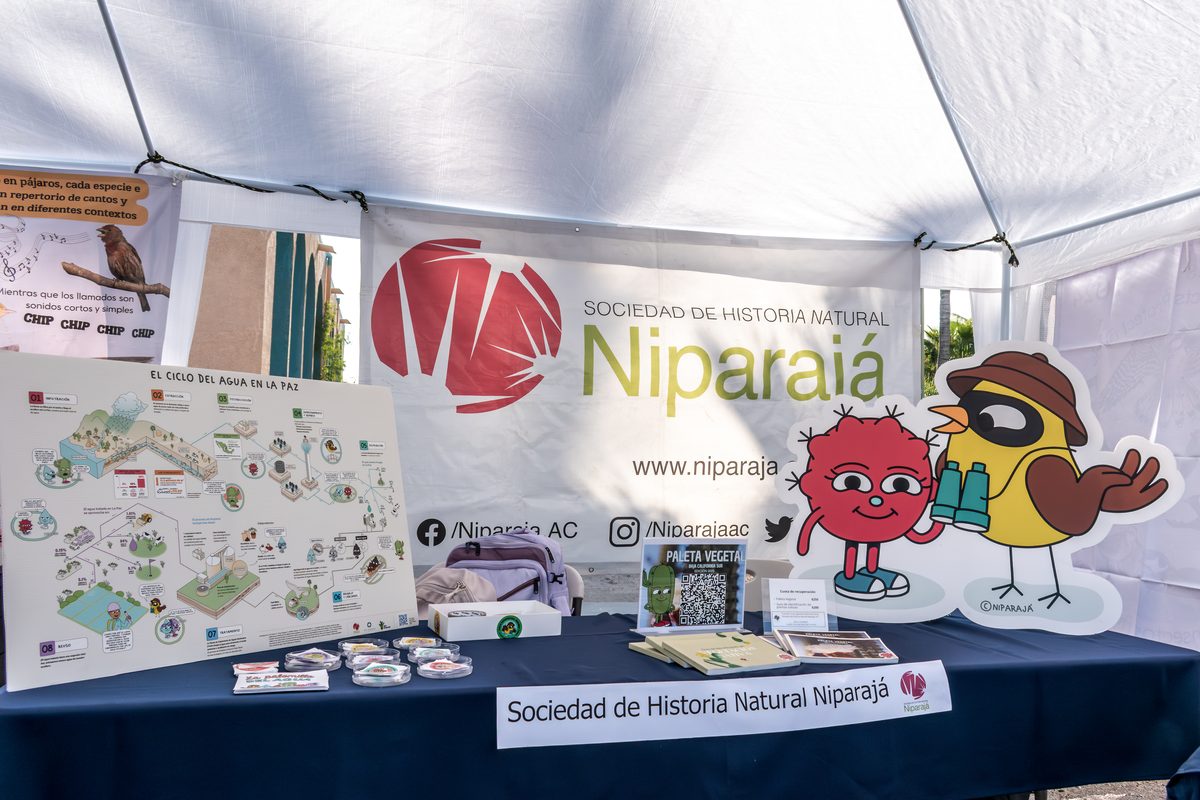
The characters became the visual language for complex systemic information. We used La palomilla to illustrate the entire Urban Water Cycle of La Paz, translating critical hydrological data into an accessible map. A physical scale model of the watershed travels to nearly every public event — making visible a process most people never think about until the tap runs dry. An illustrated children's book is also in development, following a single water drop from rain to aquifer to city pipes and back.
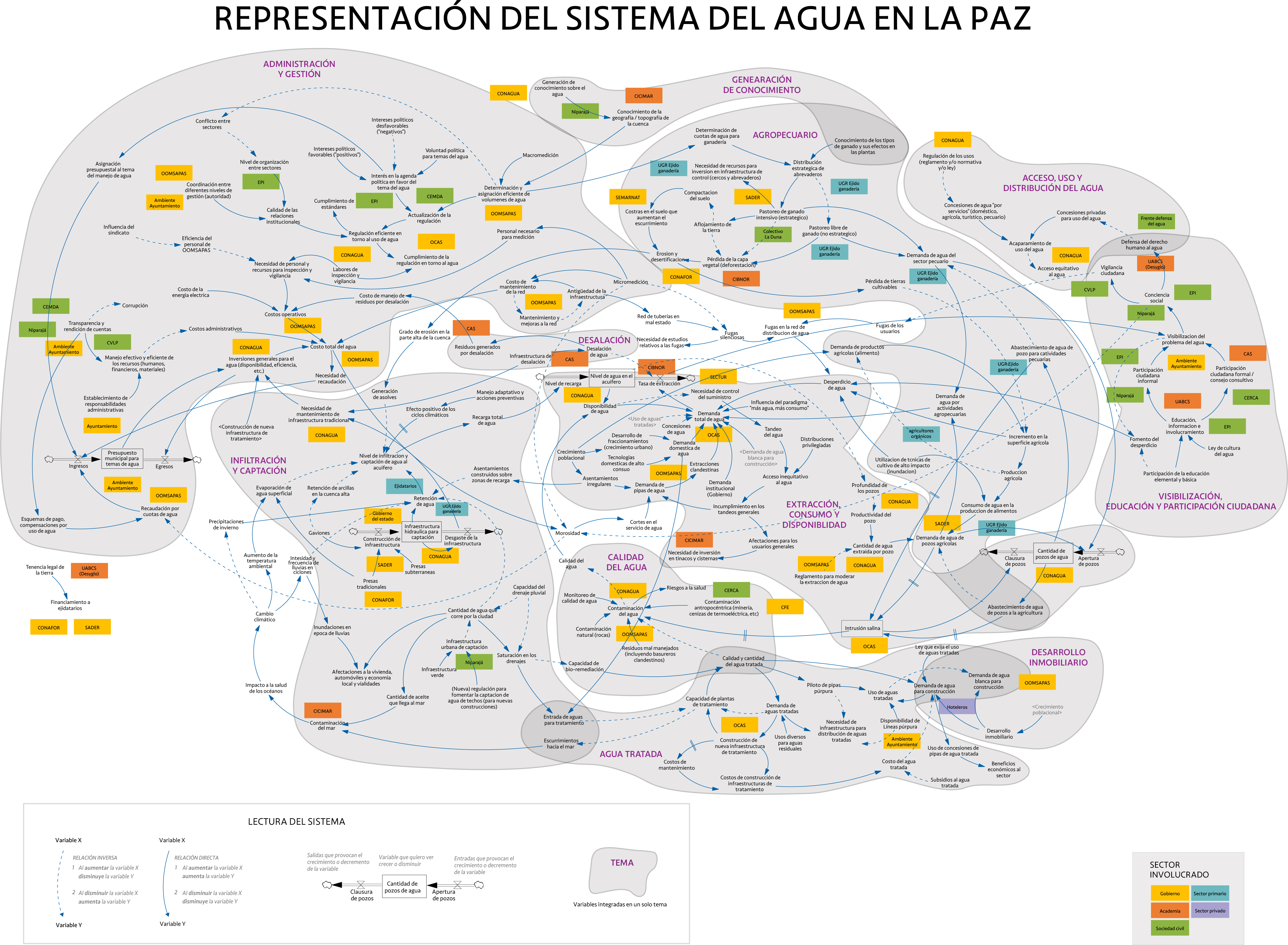
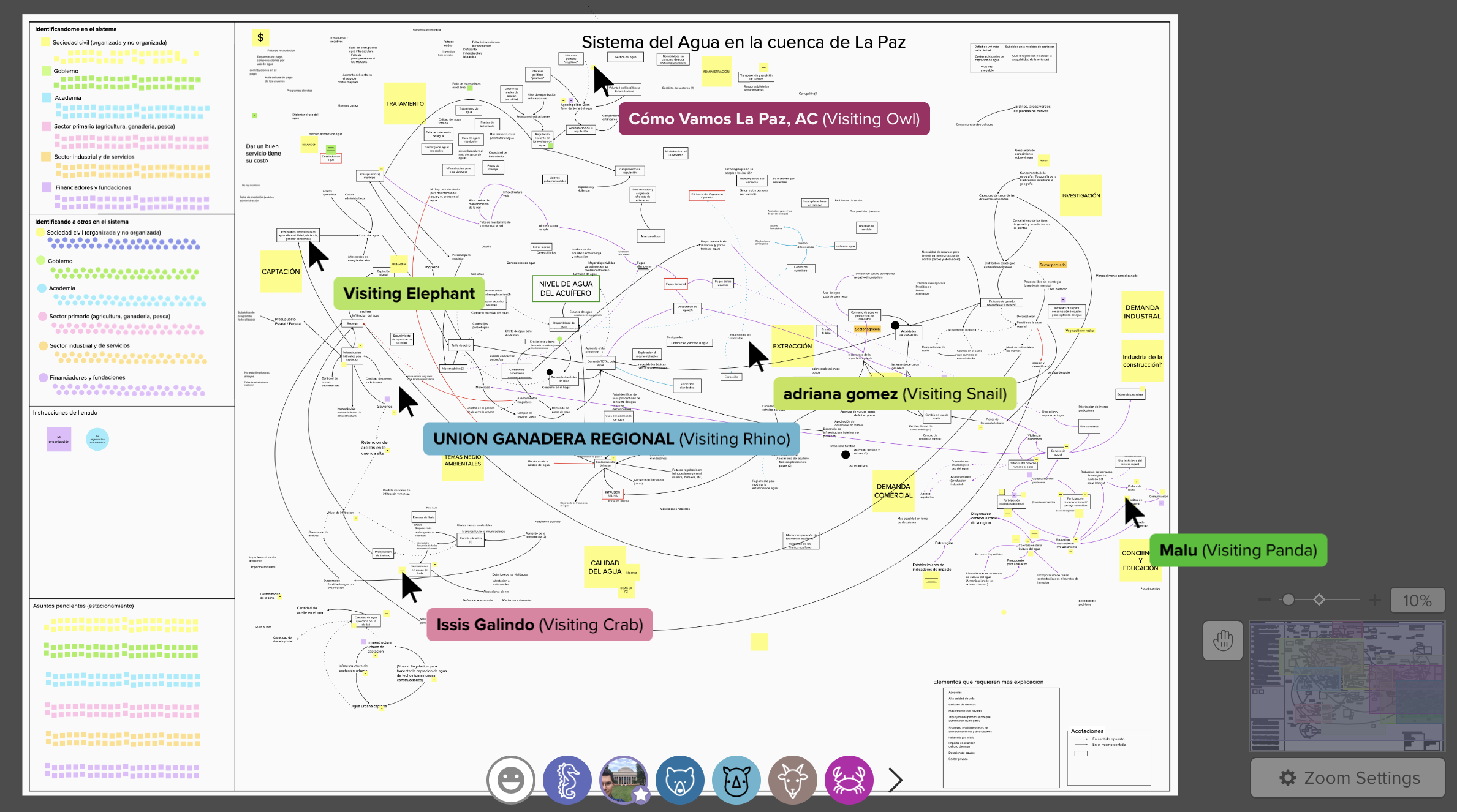
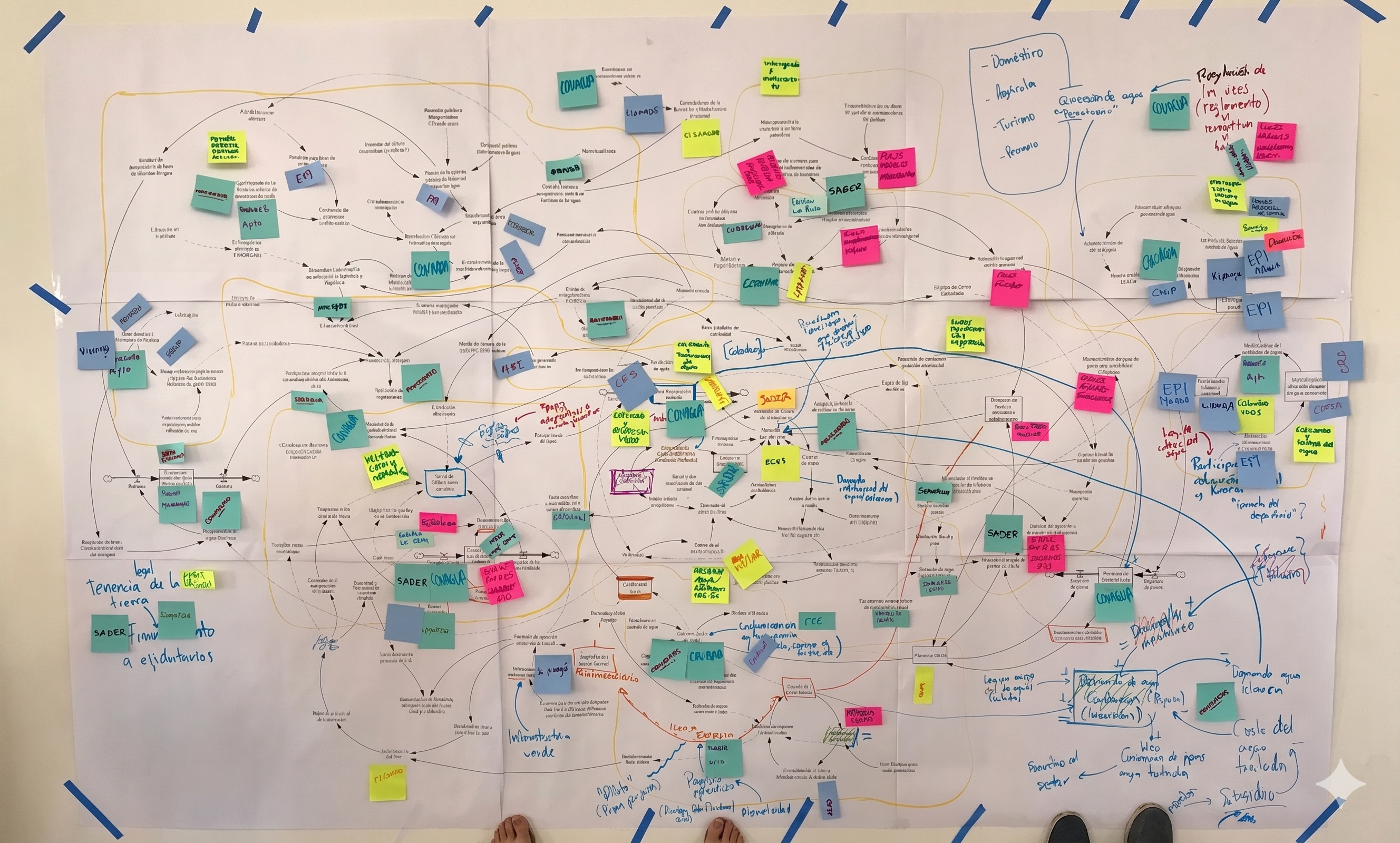
A systemic visual representation of the interconnected water watershed of La Paz — a Causal Loop Diagram co-constructed to support multi-actor decision-making and integrated management. Hundreds of variables, ten interconnected clusters, one shared map.
The challenge: A crisis no one was seeing whole
Interventions in La Paz's water management were often fragmented, addressing symptoms rather than root causes. We needed a tool to foster dialogue and shared understanding among the diverse actors involved — a map that showed not who was at fault, but how cause and effect actually travel through the system. That shift in framing removes a great deal of tension and allows actors from very different institutions to engage honestly with the complexity they share.
Mapping the complexity: From virtual collaboration to physical map
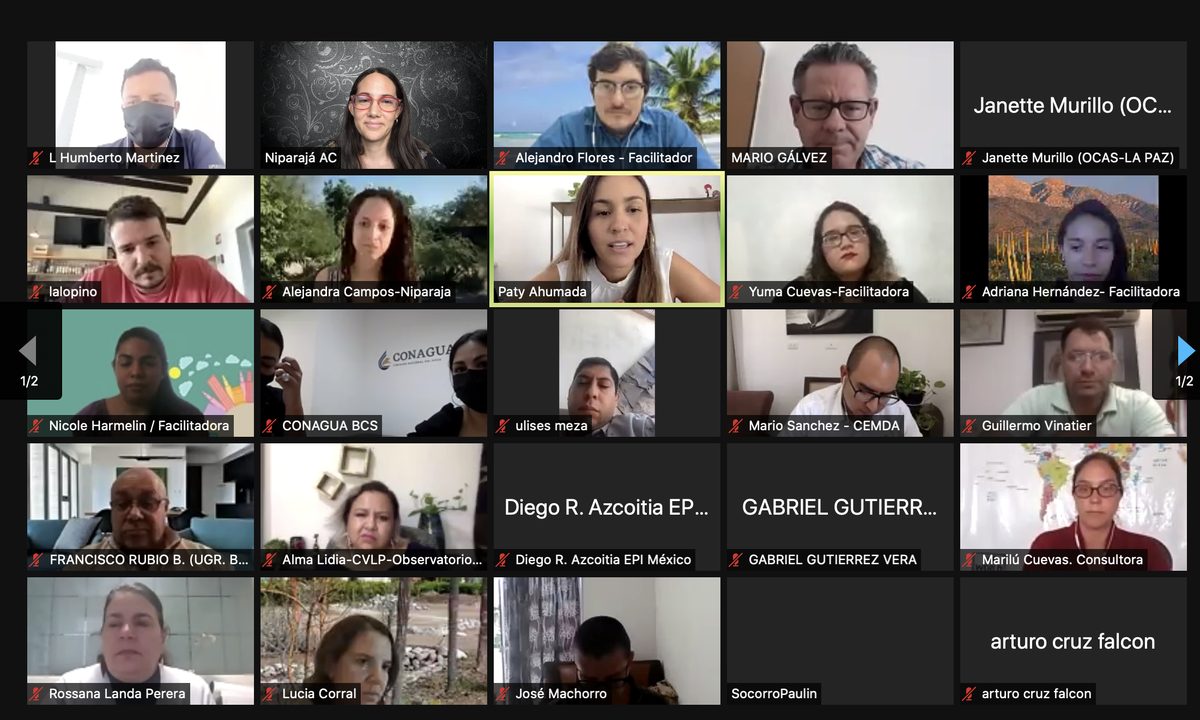
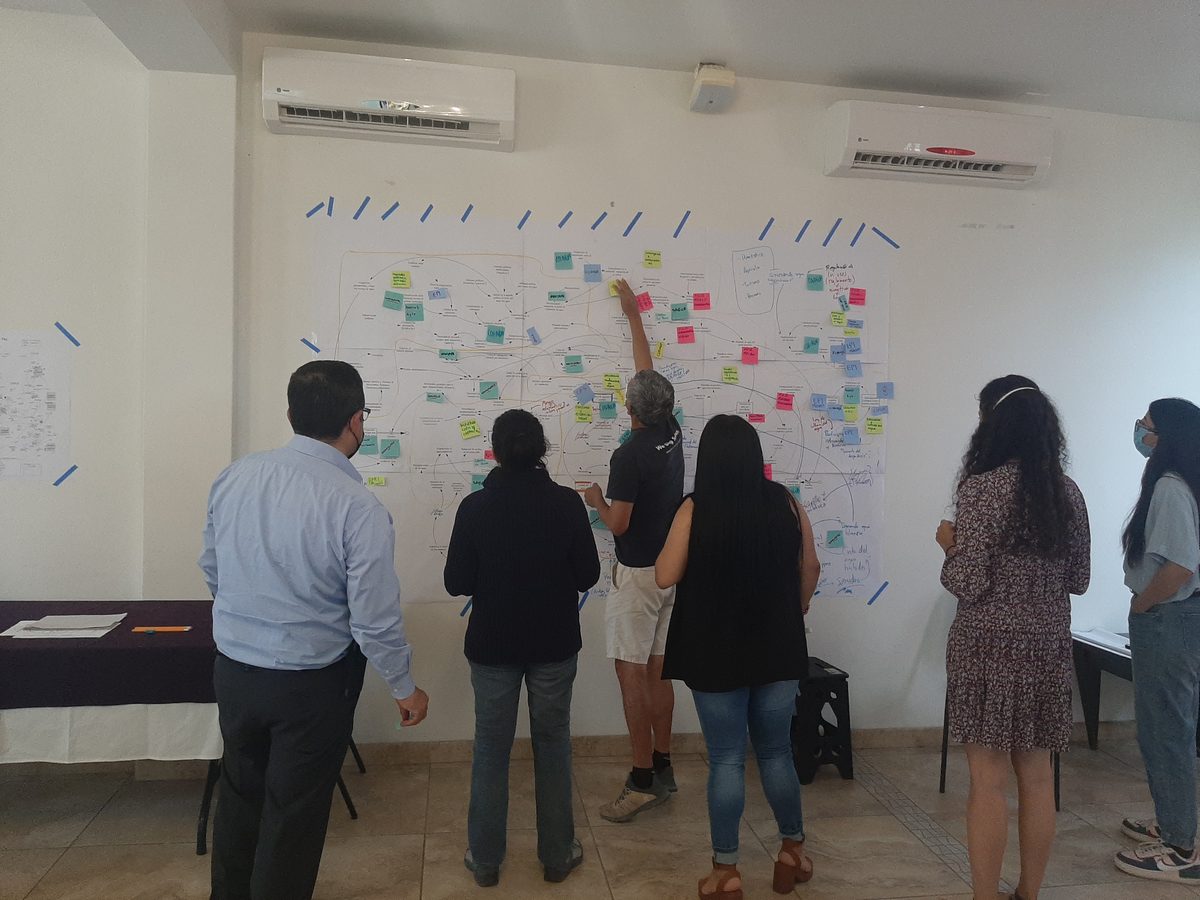
The process began with a virtual multi-actor session during COVID-19 lockdowns. Representatives from government, academia, and civil society worked together to identify the core variables impacting the watershed and how they relate to one another. Following the digital mapping, we convened an in-person workshop where participants could physically arrange and connect the variables — making the system tangible.
Virtual collaborative session during COVID lockdowns — first draft of the systemic map
Workshop detail — co-design of the causal loop diagram
In-person workshop — participants building the physical map together
1 / 3
Workshop process: Building a shared language
While the technical model was built in collaboration with an expert systems consultant, my role centered on facilitating the multi-sector workshops and translating the complex final product into an accessible visual design. The goal was not a perfect map — it was a shared space for honest conversation about the system everyone inhabits but no single actor sees whole.
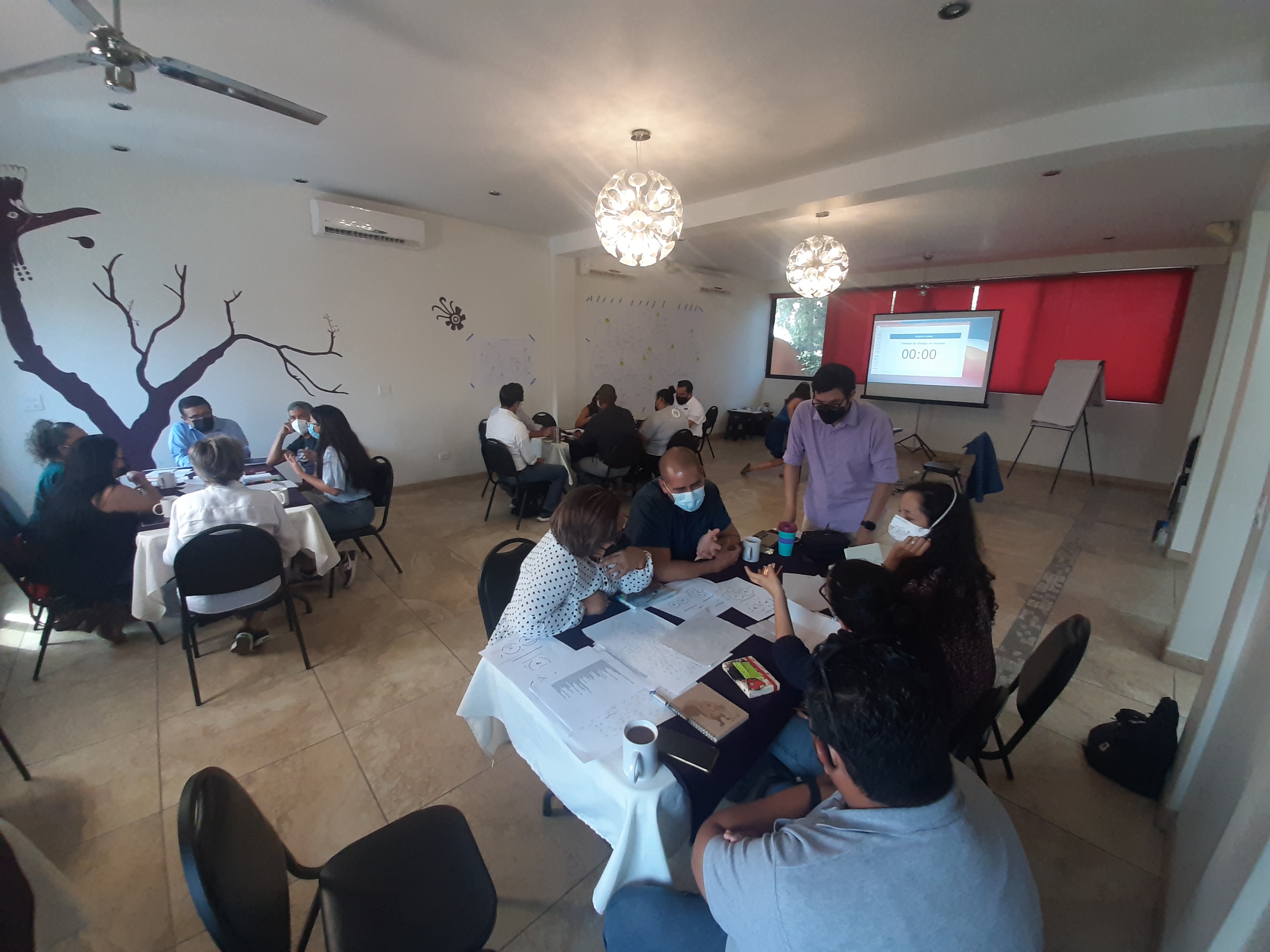
Multi-actor workshop — building shared ownership of the systemic map
In-person workshop — participants building shared understanding around the physical map
The final map: Ten clusters, hundreds of connections
The resulting visual map groups hundreds of variables into ten interconnected clusters — including administration, infiltration, water quality, demand, reuse, and citizen participation — each tagged by the responsible institutional actor. It became a key tool for the city's Action Program for Integrated Watershed Management (PAMIC La Paz), allowing decision-makers to visualize short, medium, and long-term effects of their strategies. Systemic maps are never truly finished; they evolve as context changes.
Final Causal Loop Diagram — systemic representation of the La Paz water system
Project 03 · Governance · Institutional leadership · Alliance building
Spaces of Advocacy and Governance.
Active leadership and facilitation within key decision-making spaces in La Paz — bridging civil society, government, academia, and international organizations to drive systemic water resilience. Elected unanimously as President of the Municipal Water Advisory Council: the first woman, and first person from civil society, to hold the role.
The challenge: From plans to action
For decades, La Paz has had technical plans that often end up in drawers due to disconnected institutional priorities. The real challenge is governance: bringing diverse, sometimes opposing, actors to the same table to build shared visions that translate into actionable, long-term strategies. The question was not what needed to be done — it was how to make those who could do it want to act together.
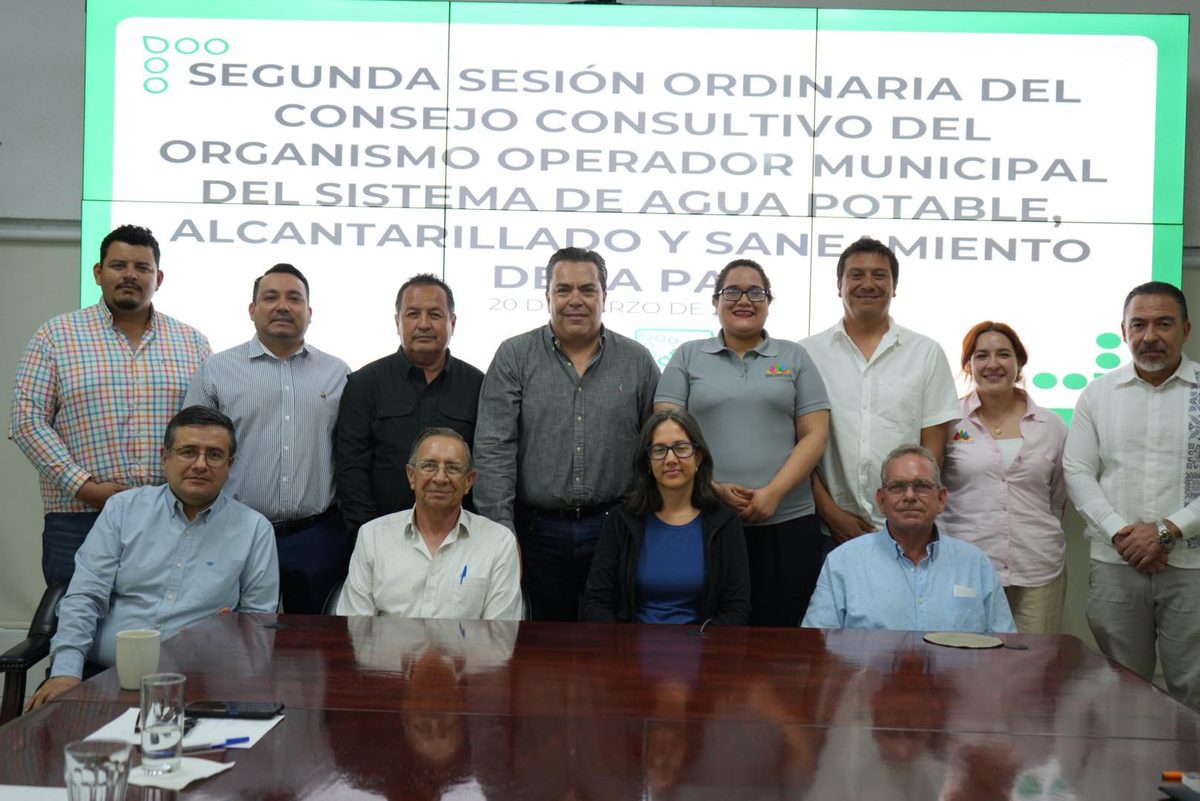
Municipal Water Advisory Council — OOMSAPAS La Paz
Municipal Water Advisory Council: Strategic leadership in new territory
The Advisory Council for the La Paz Municipal Water Utility (OOMSAPAS) is composed of the utility's authorities and citizen representatives. I was elected unanimously as President of the citizen section — the first woman, and the first person from civil society rather than the water technical sector, to hold the role. What I brought — and what had not been done before — was an environment of trust where every member could express their interests openly; common goals; and a clear sense of what the council would prioritize and advance during our mandate. For the first time, these meetings are moving from procedural exchanges into coordinated action.
Second ordinary session — Municipal Water Advisory Council (OOMSAPAS)
1 / 1
Alliance building: The Reclaimed Water Alliance and beyond
Since 2023, I have coordinated the Alianza Agua Recuperada, a coalition bringing together the municipal utility, the state water commission, academia, and conservation NGOs. Together, we are working to transform treated wastewater from a problem into a vital asset for our desert city — through joint advocacy, narrative change, and on-the-ground work.
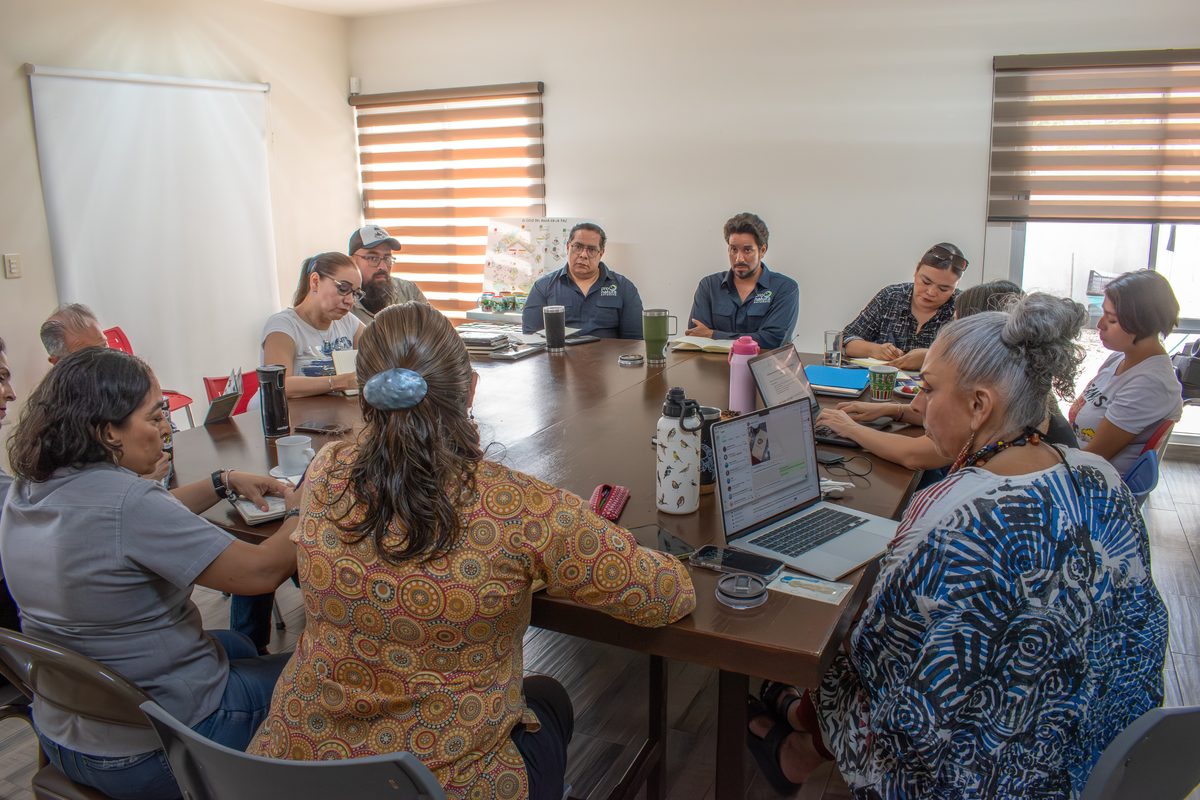
Alianza Agua Recuperada — multi-actor coalition meeting
Alianza workshop — wetland management and water reuse
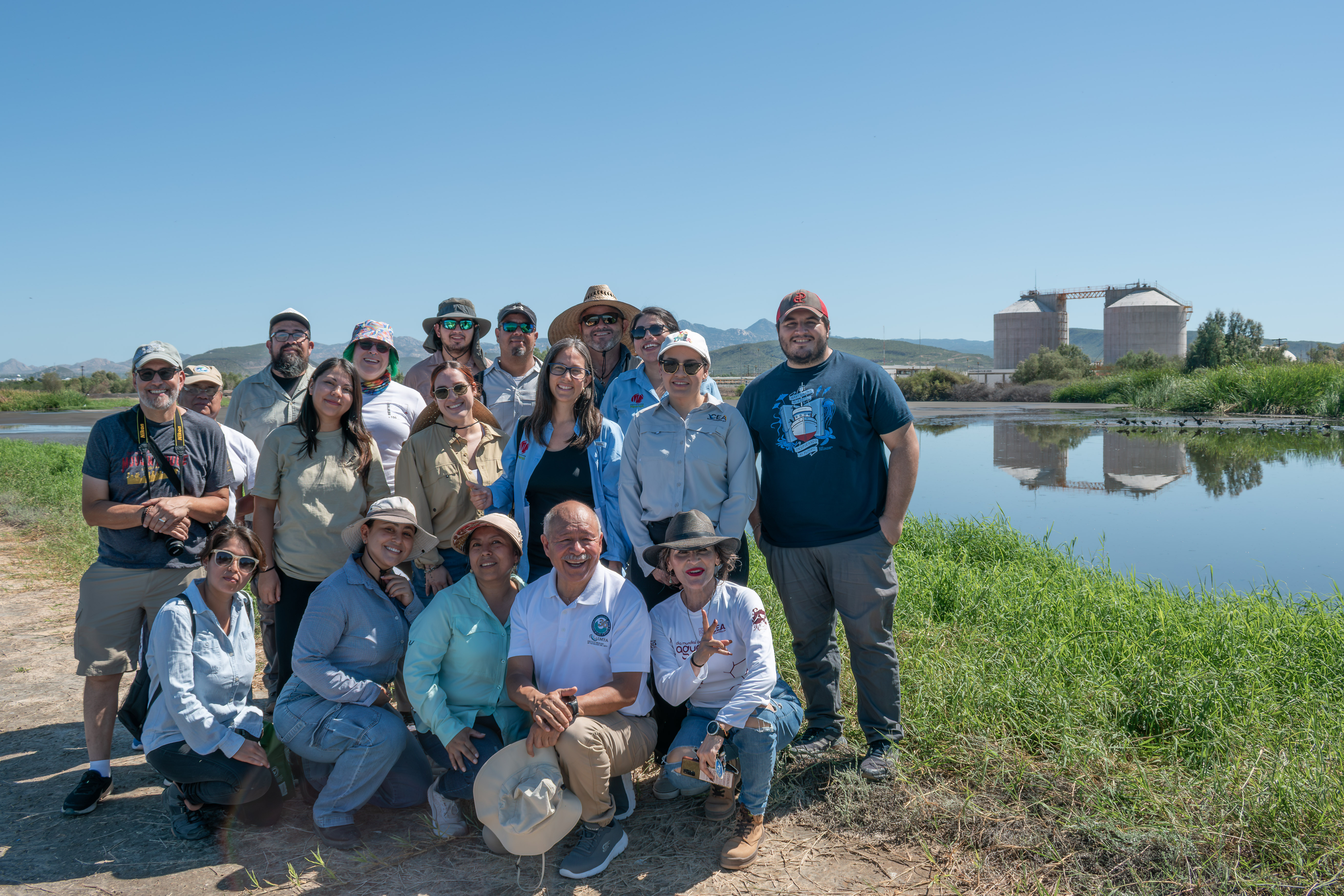
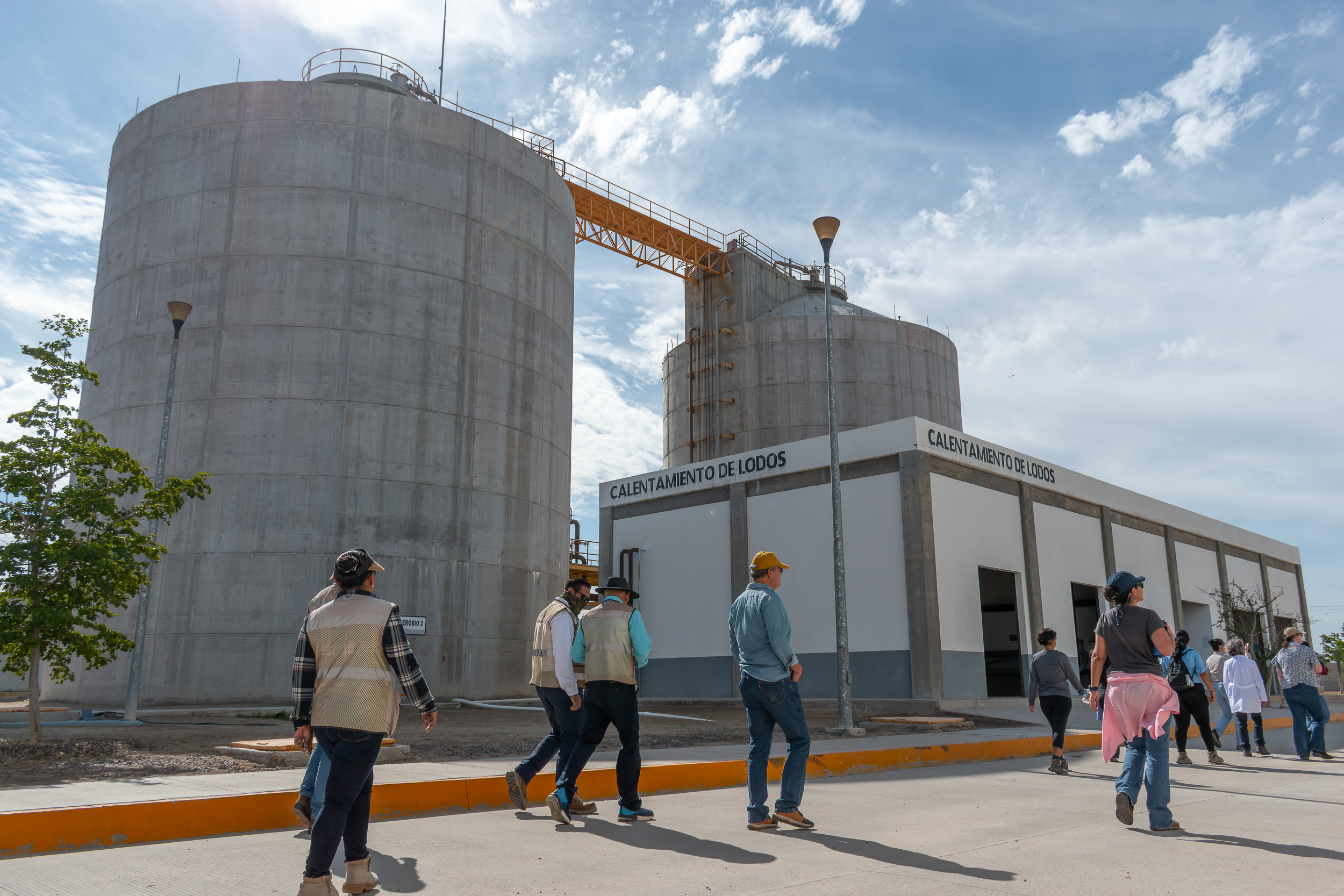
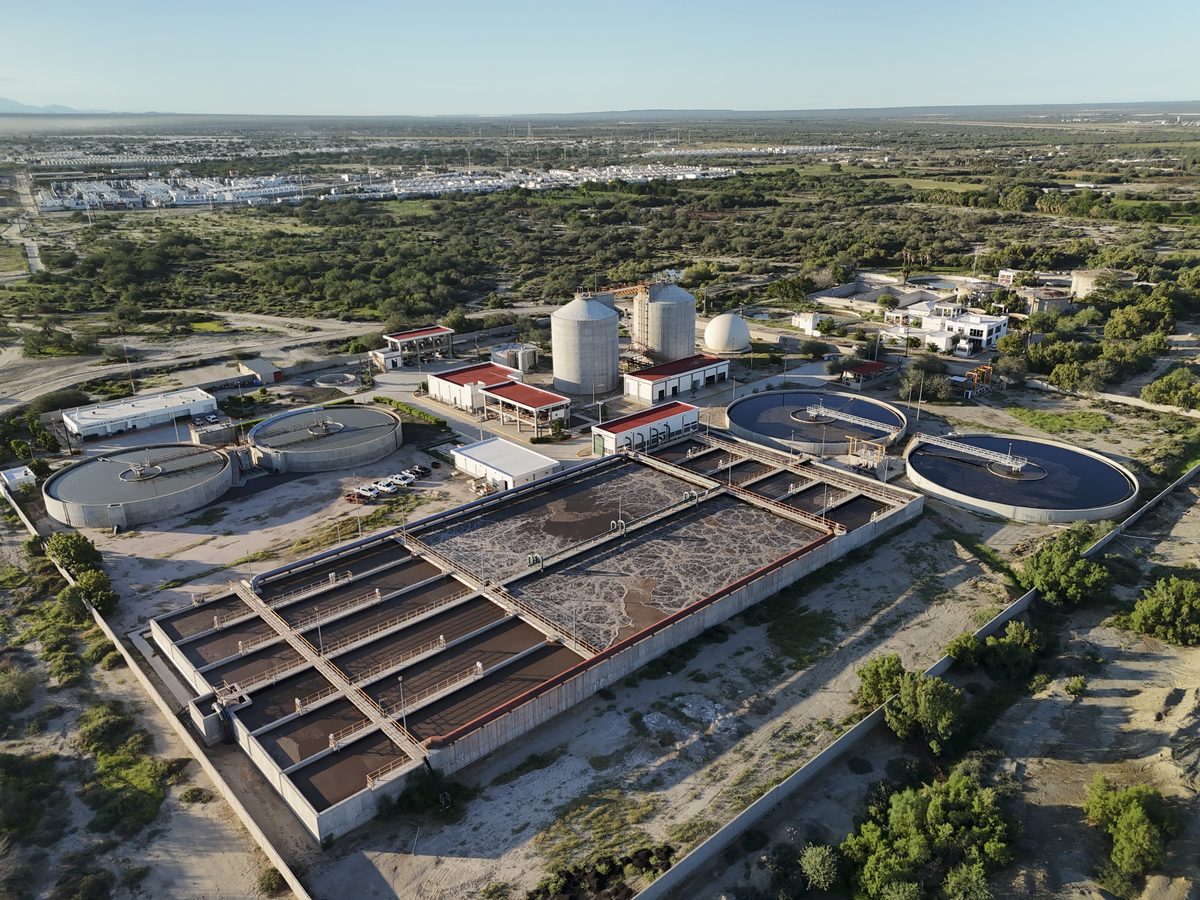
La Paz Wastewater Treatment Plant — Alliance coordination site
1 / 3
The team: Building the La Paz Water Resilience Strategy
Since 2025, I have also coordinated a newly formed multi-actor group alongside international and local organizations — including the Alliance for Global Water Adaptation (AGWA), Fundación Gonzalo Río Arronte (FGRA), and Alumbra Innovations Foundation (AIF) — tasked with co-designing a comprehensive, long-term water resilience strategy for La Paz.
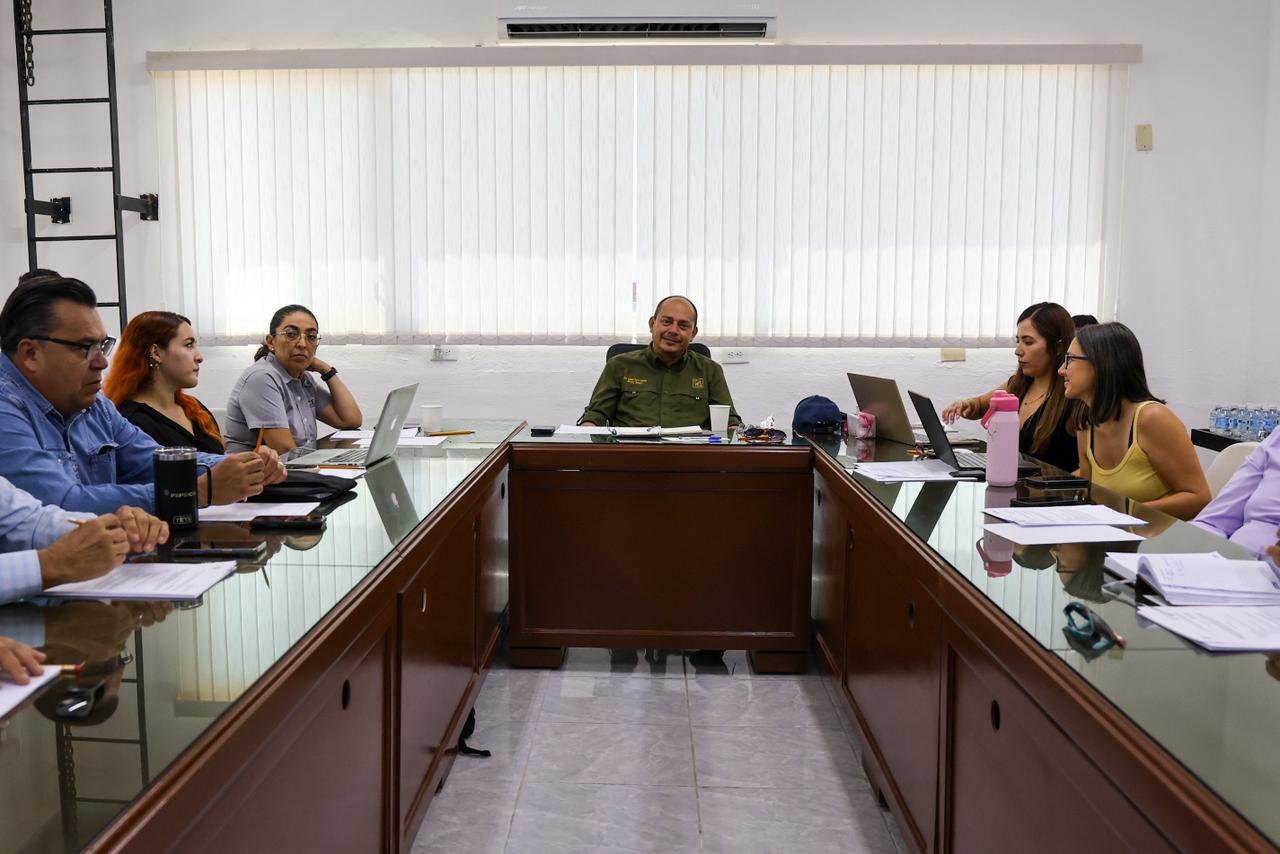
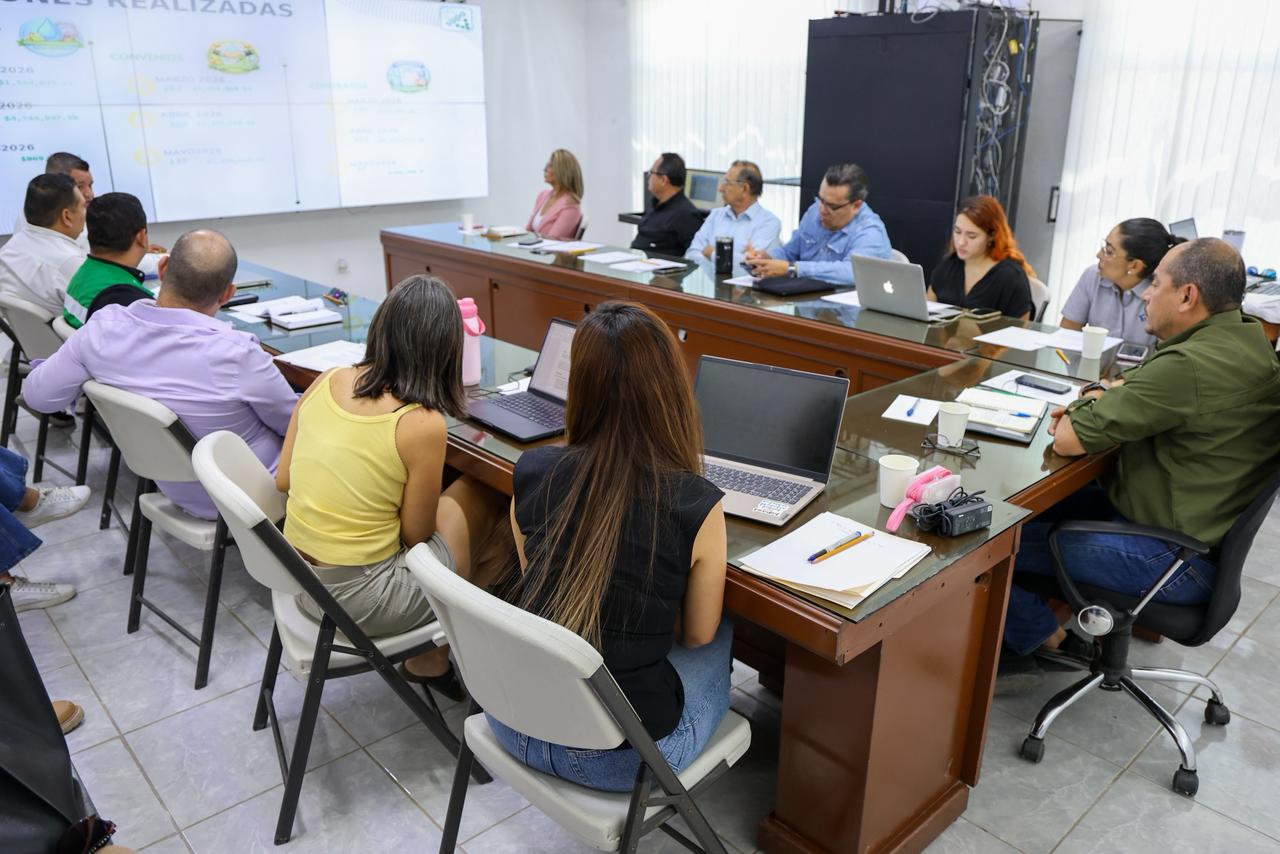
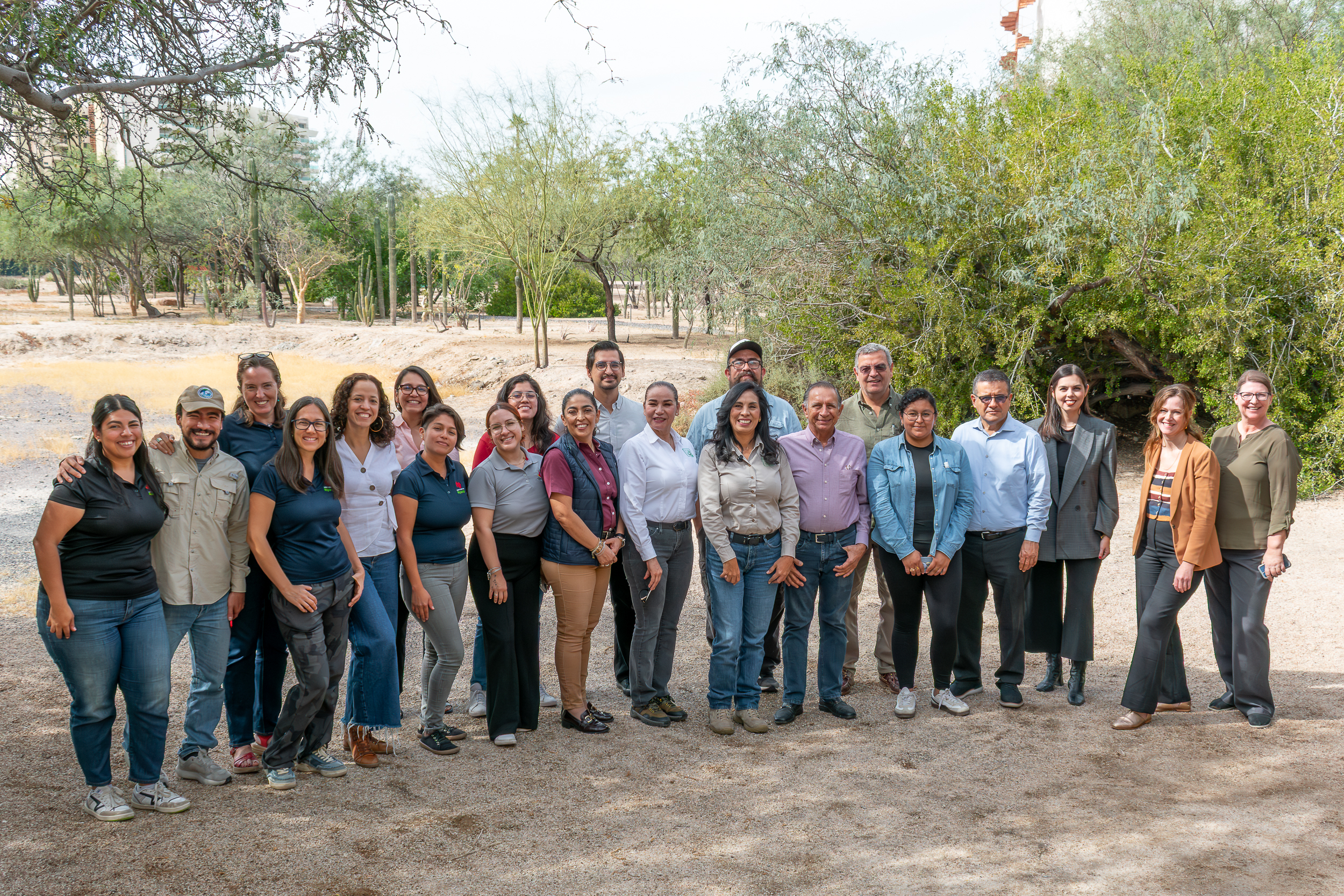
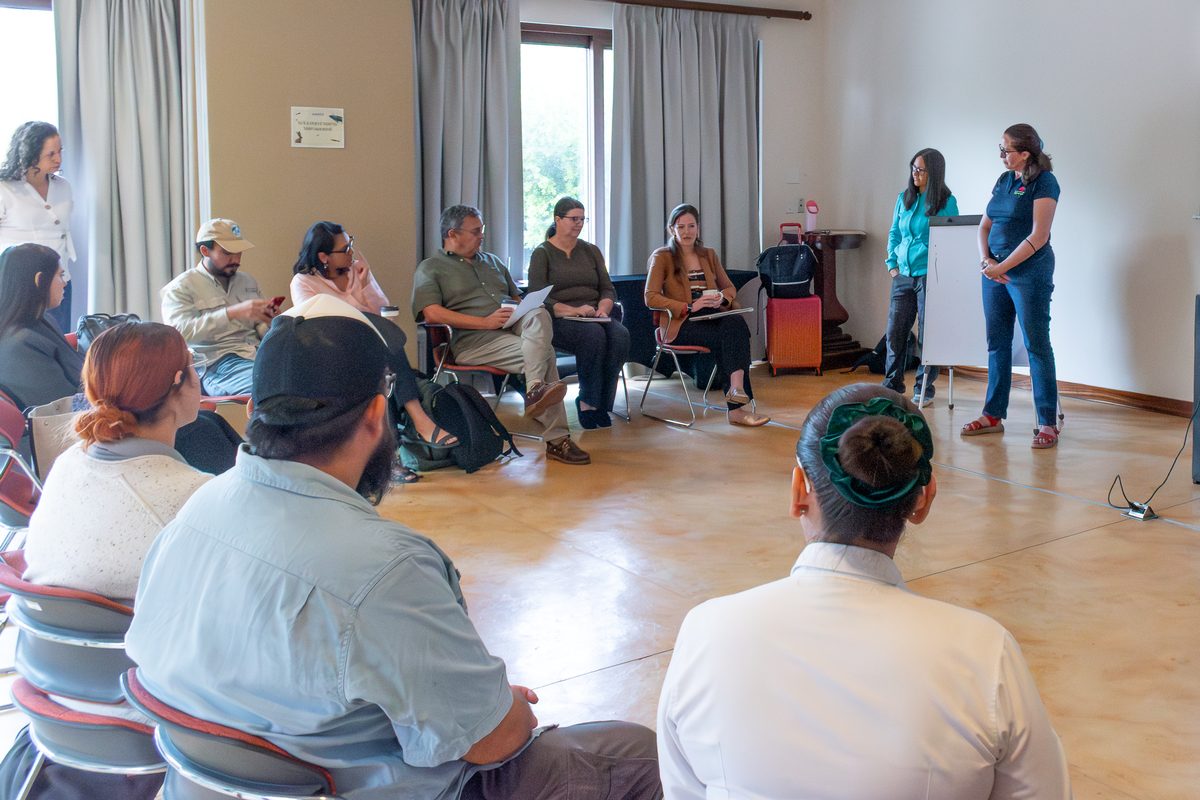
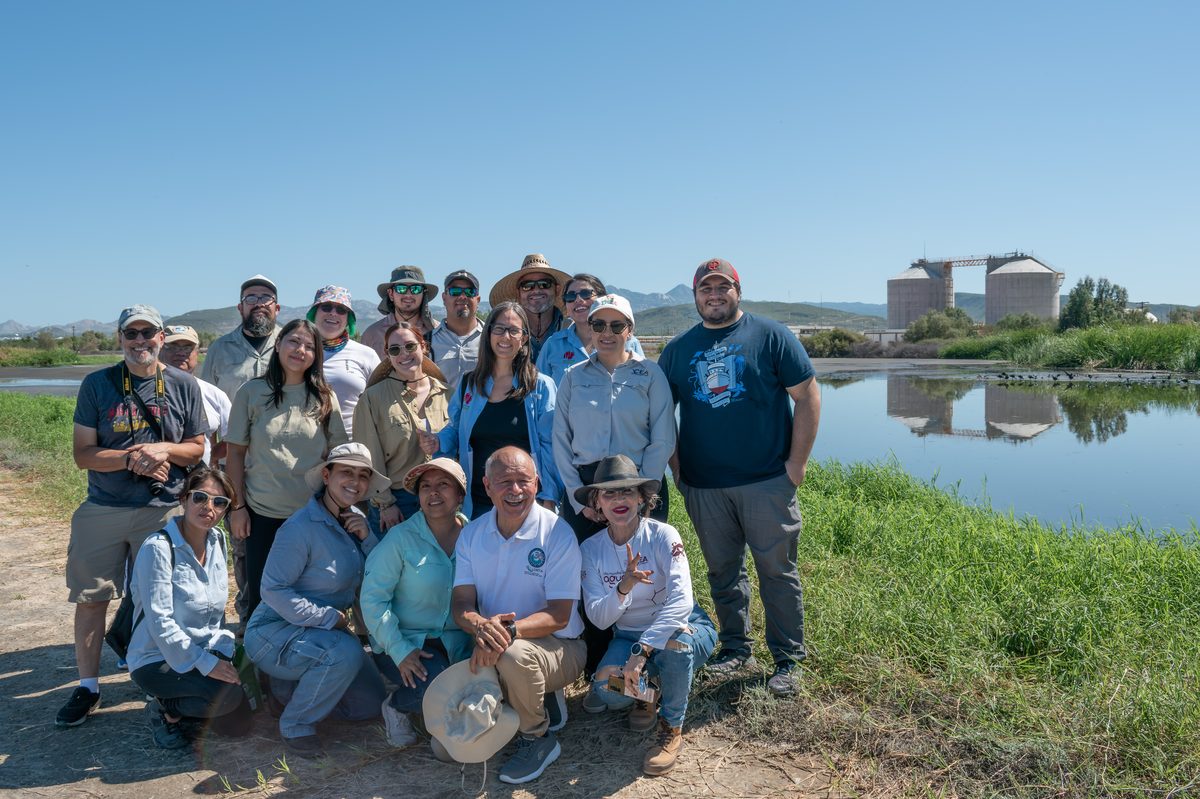
In December 2025, fifteen institutions and twenty-two people gathered in one of the rare spaces where these actors have ever fully converged. The conclusion of that gathering was clear: there is shared will to do this differently.
Water Resilience Strategy workshop — fifteen institutions, twenty-two participants
Water resilience working group — La Paz, Baja California Sur
Water Resilience Workshop, December 2025 — fifteen institutions, twenty-two participants
Alianza Agua Recuperada: Reclaimed Water in Practice.
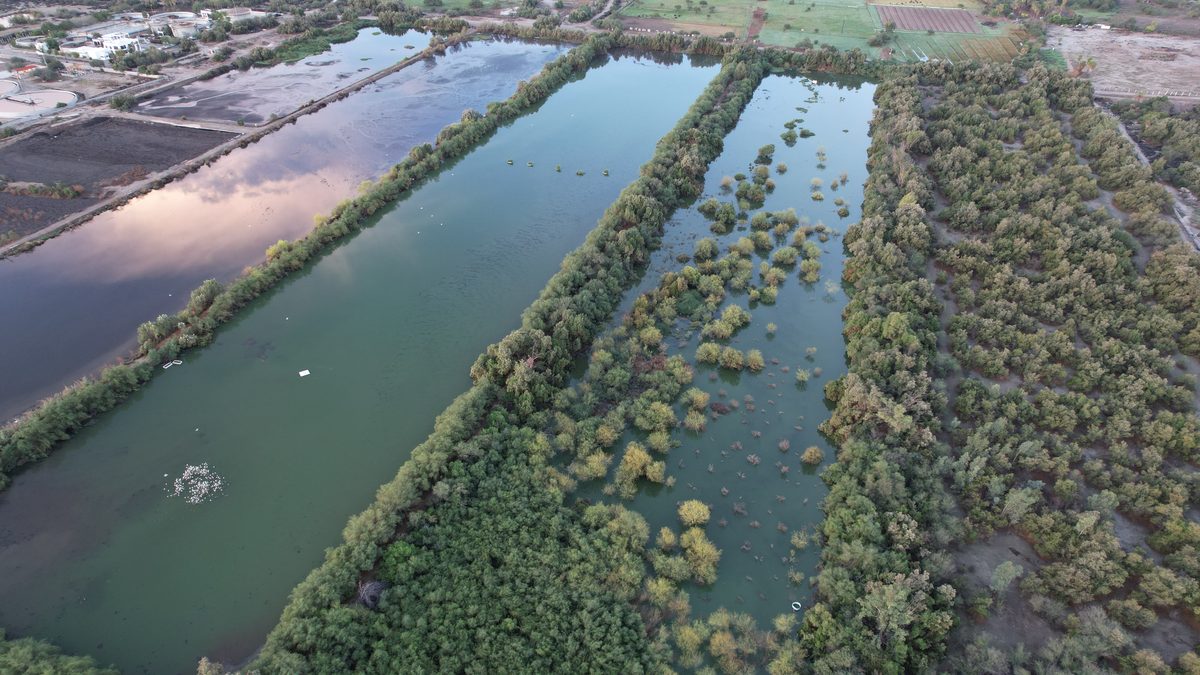
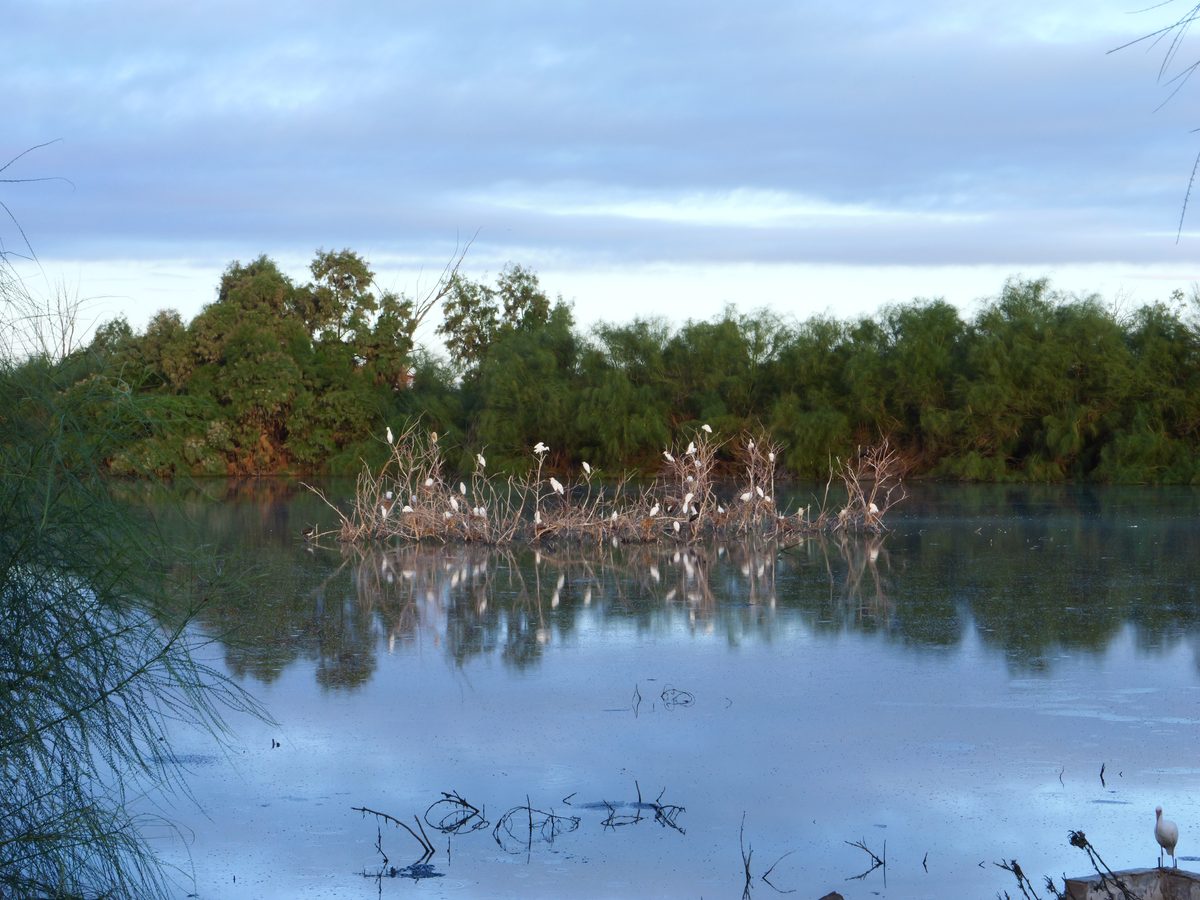
Transforming wastewater into a resource — reducing dependence on the aquifer by creating new water sources, recovering ecosystems, and raising the quality and range of uses of treated water across the city. The former oxidation ponds have been restored as living wetlands where residents now come to watch birds.
The challenge: Rethinking what water is for
We cannot keep letting clean drinking water wash away with waste. La Paz's aquifer is being drawn down faster than it can recharge; and the city cannot afford to treat every use of water as if it required drinking-water quality. Part of the answer is rethinking what each quality of water is for — and building the technical capacity, the alliances, and the public trust to make that rethinking real.
Ecosystem restoration: The rebirth of artificial lagoons
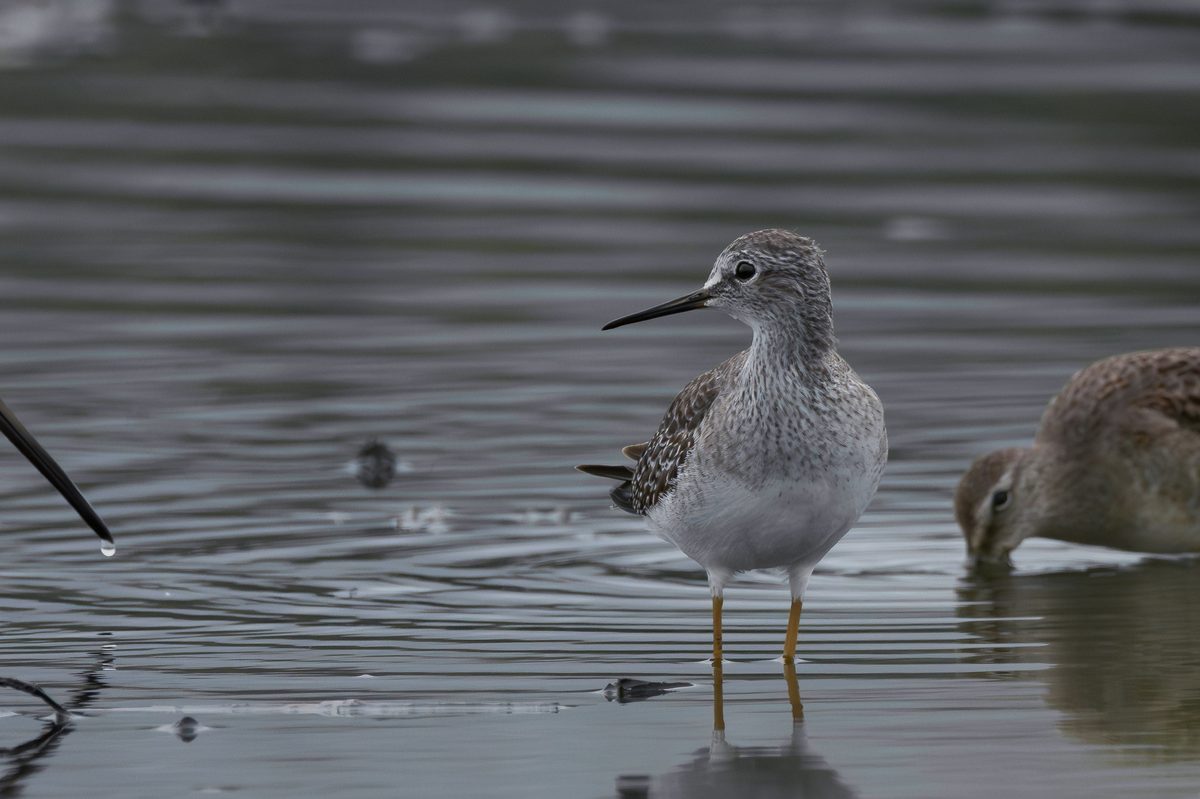
One pillar of the Alliance focuses on restoring artificial wetlands as spaces for life and natural filtration. We are not just recovering biodiversity; we are transforming the site into an educational urban park where residents come to walk and watch birds — including the Peninsular Masked Yellowthroat, an endemic species that has made these wetlands its home. What was once an eyesore is becoming a place people visit and care about — a living example of nature-based water treatment integrated into the urban fabric.
Living wetlands — water quality and biodiversity
Restoration in progress
1 / 2
Strengthening the utility: Building OOMSAPAS's operational capacity
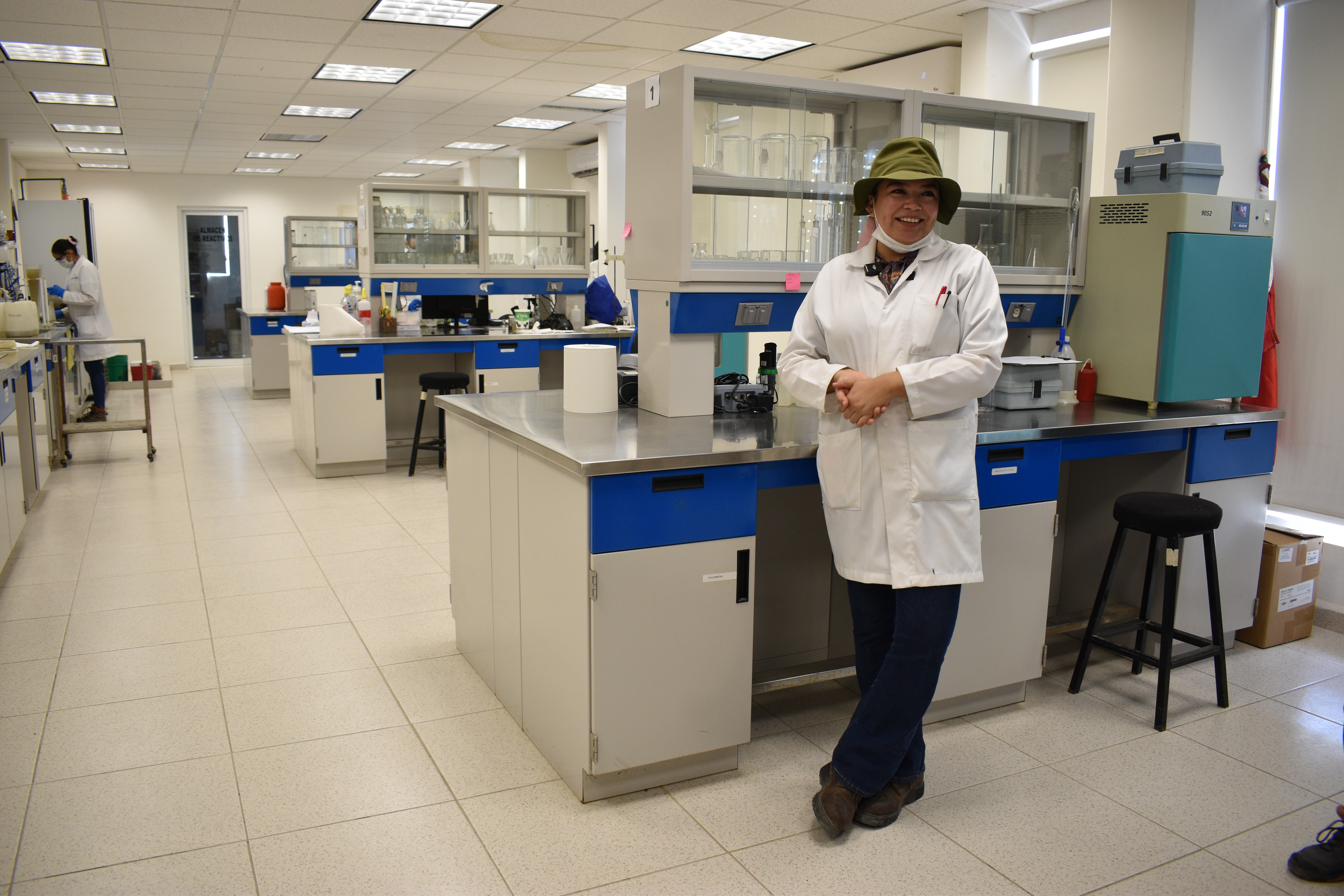
We work hand-in-hand with OOMSAPAS to build the operational capacity of the Wastewater Treatment Plant (WWTP): providing laboratory equipment for water quality analysis, training courses on wetland management and Mexican water reuse standards, and opportunities for plant staff to connect with the national water network through ANEAS. Our goal is to support the conditions under which treated water quality improves enough to expand its use across the city.
La Paz Wastewater Treatment Plant (WWTP) — aerial view
Laboratory equipment for water quality analysis — OOMSAPAS La Paz
Alianza training workshop — wetland management and water reuse standards
1 / 3
Project 05 · Green infrastructure · Community design · Native ecology
Aquifer Recharge and Nature-Based Solutions.
Designing urban spaces that restore the water cycle: capturing rain, infiltrating it into the aquifer, reducing runoff and urban heat, and recovering native ecosystems — through community co-responsibility. Working through the Reclaimed Water Alliance and directly with communities since 2019.
Impact: Green infrastructure for a city that learns to absorb water
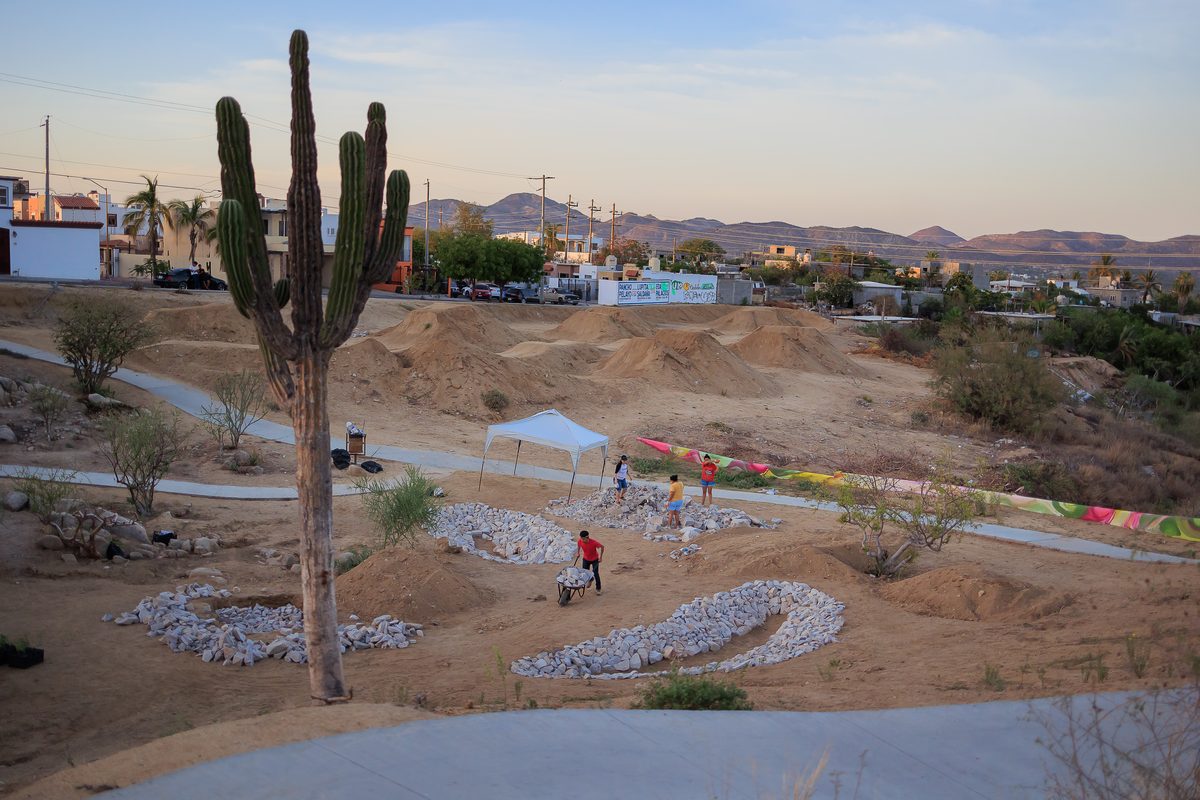
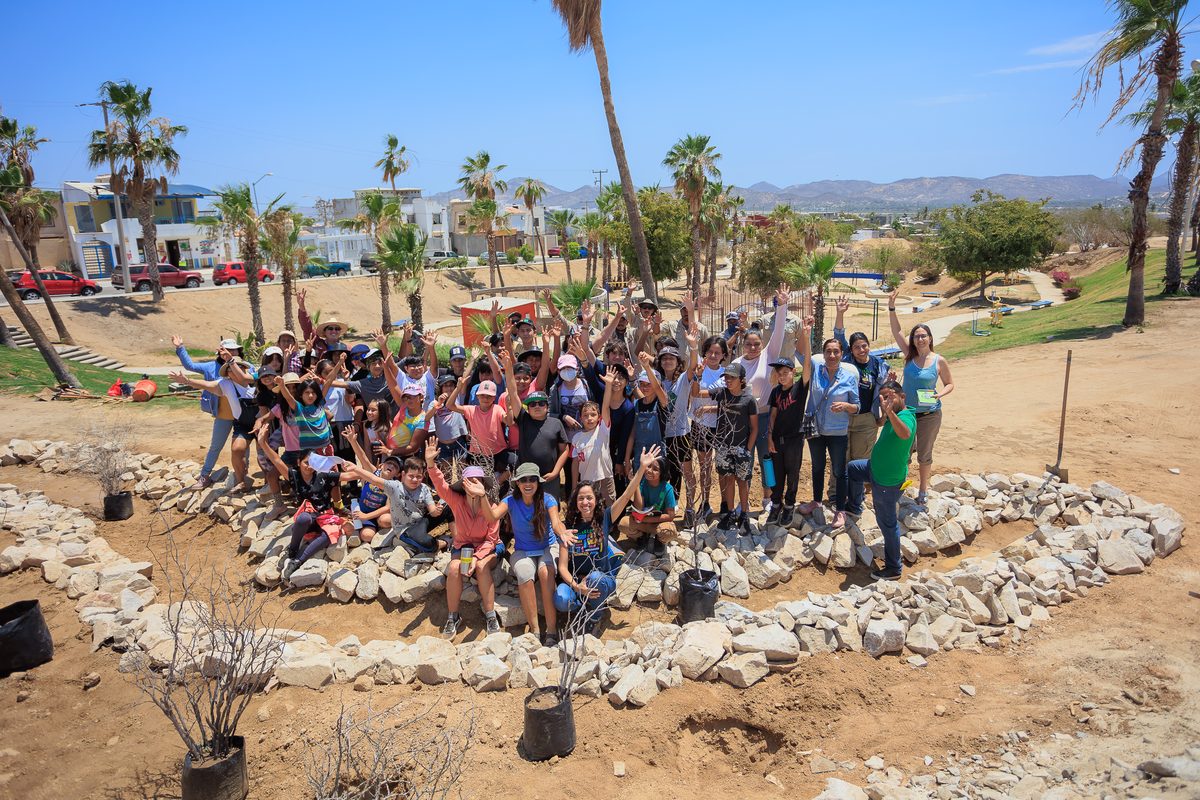
This work turns urban spaces into sponges: capturing, filtering, and infiltrating water before it is lost to runoff. Since 2019, nine urban spaces have been intervened, recovering native vegetation, building community stewardship, and measurably increasing rainwater infiltration into the aquifer.
9
urban spaces
4,927
m² intervened
461
native specimens planted
821,690
liters of rainwater harvested
658
community stewards
In the field: Community spaces as living infrastructure
Each site is designed in collaboration with the community who will care for it. The result is not just functional infrastructure — it is a space people feel ownership over, that carries meaning beyond its technical purpose. These sites are slowly changing what La Paz expects from its own public spaces.
Community stewards — celebrating a completed green infrastructure space
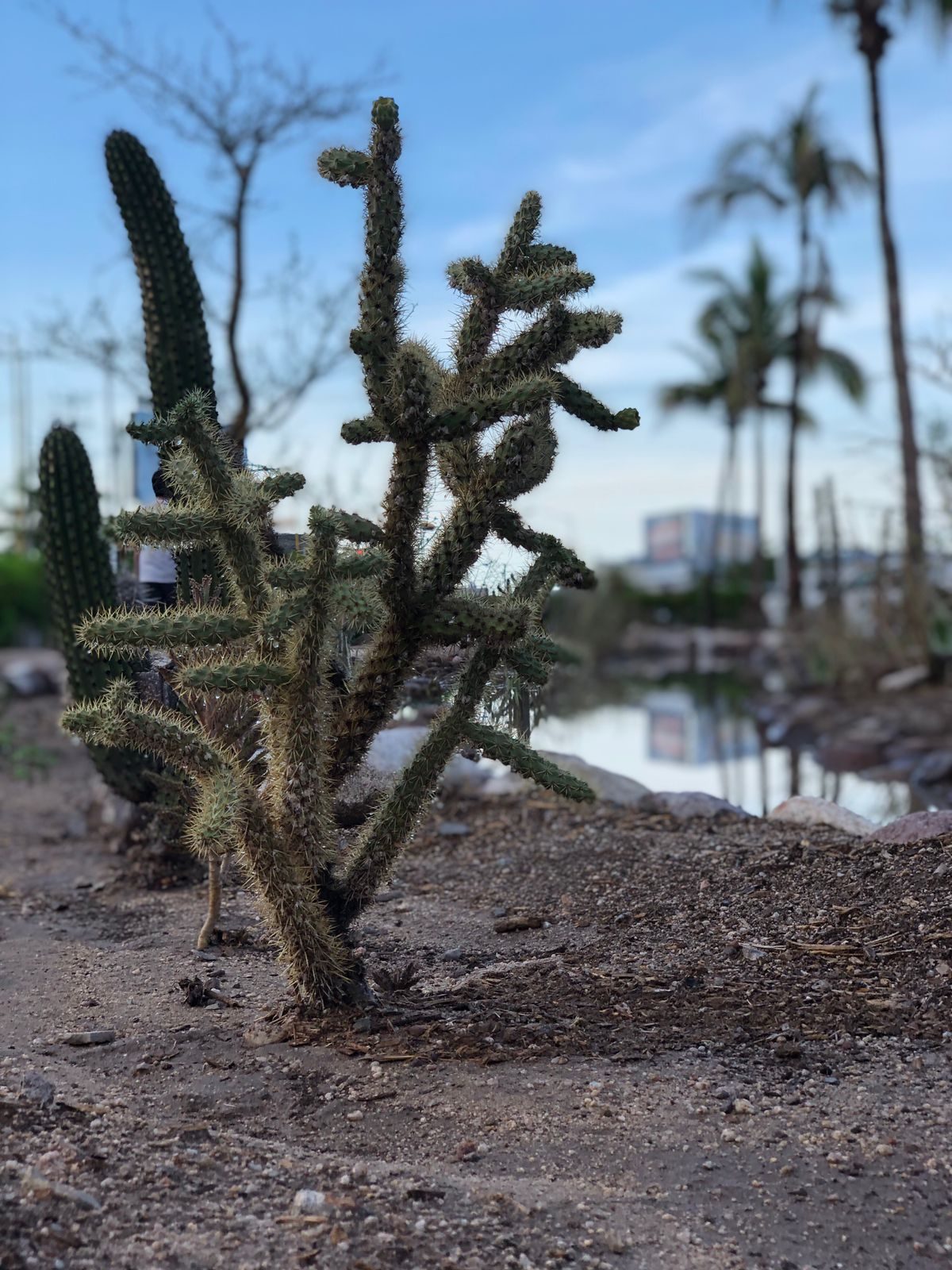
Native vegetation — endemic species returning to urban spaces
1 / 2
Native vegetation palette: Building a culture of native planting
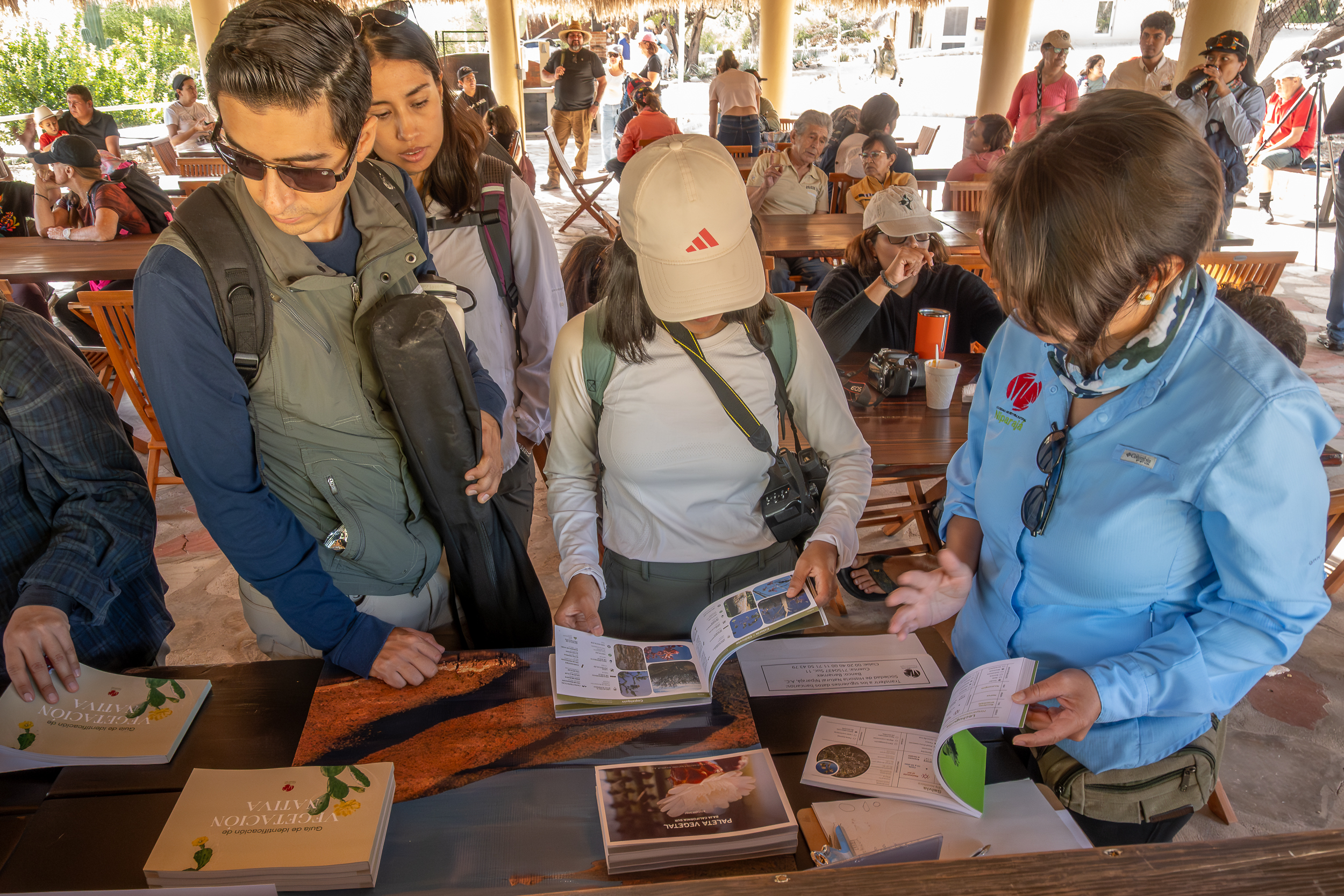
The native plant identification guide was my idea: a practical tool for residents, urban planners, and landscapers to recognize and choose drought-resistant local flora. The native vegetation palette already existed at Niparajá; what I led was a complete redesign of both its visual identity and its content. Together, these tools are doing something urgent: building a culture of native planting in a city that will depend on its own vegetation to stay cool, absorbent, and alive as the climate shifts.
Paleta Vegetal BCS — redesigned native vegetation guide for La Paz residents and planners
Paleta Vegetal BCS — native plant selection for urban restoration
For collaborations, speaking invitations, and international partnerships.
National Geographic Society · Illuminating Climate Solutions · Supporting materials
The Storms We Need: A Story La Paz Has Begun to Tell.
Proposed by Alejandra García Castro, Niparajá A.C. · USD $45,000 · 24 months · March 2027 – March 2029. A short documentary, interactive web experience, and replicable toolkit designed as the narrative layer of La Paz's Water Resilience Action Strategy.
La Paz is a desert city by the pristine blue Gulf of California. Water comes from an aquifer that is being drained faster than it can refill — and the hurricanes that recharge it are the same ones that destroy the city each season. Plans to change this have been written for decades. Most have ended in drawers.
The reasons are structural. Every decision-maker who touches water works on a different timeline. Every institution carries its own priorities. Every gathering for 'yet another plan' runs against the gravity of work people already cannot finish. What La Paz has lacked are efforts that give back something visible to each participant from the very start — not only at the end — so that coming together feels worth the time it costs.
In 2023, something began to shift. A small alliance came together around an idea that had been buried under stigma: that treated wastewater could be an asset, not a problem. For the first time in La Paz, government, academia, and civil society worked together on treated water reuse. The phrase agua recuperada has entered everyday speech in the city; the former oxidation ponds have been restored and renamed as living wetlands, where residents now come to watch birds.
Since 2025, that alliance and a wider multi-actor working group have been building something larger: the Water Resilience Action Strategy for La Paz — a long-term plan designed under the Water Resilience Assessment Framework (WRAF), an international methodology developed by the Alliance for Global Water Adaptation (AGWA). In December 2025, fifteen institutions and twenty-two people gathered in one of the rare spaces where these actors have ever fully converged. The conclusion was clear: there is shared will to do this differently.
Why now
The Strategy enters its most critical phase between 2026 and 2027 — before, during, and after state and municipal elections in June 2027, and the change of administration in September. A Strategy that survives the transition will have been worth the effort of building; and a transition that meets a Strategy already in motion can become the place where the work takes root institutionally.
What will determine the outcome is not the quality of the technical analysis — that is already in place — but the quality of the human relationships and institutional commitments that hold the work together. As so often in the water sector: the challenge is social, not technical.
What this project produces
Short documentary
12–15 min, English with Spanish subtitles. For international audiences and decision-makers.
Interactive web experience
Multimedia storytelling platform exploring La Paz's water system and the resilience strategy.
Animated series
Short pieces in local style for La Paz audiences — accessible, culturally resonant, shareable.
Replicable toolkit
Open-access for other arid Mexican cities navigating the same water and climate challenges.
Screening program
Moderated screenings and dialogue spanning technical, civic, academic, and political spaces.
What makes this different
Locally, La Paz is at the edge of what its aquifer can sustain; and the people who manage water here have chosen, together, to try something different. Globally, water is one of the central challenges of the climate era — and what La Paz learns can serve any arid coastal city in the global South watching its water future shift. Beyond geography, the approach itself — building multi-actor groups around a shared vision so that change outlasts political cycles — can travel to any place addressing water challenges in this climate moment.
Inspiration does not come from a report. It comes from understanding what change means for you and the people you love — and choosing to act because that is what you truly want. Institutions, when their alignment is real, commit and act for the same reasons.
Narrative work already underway
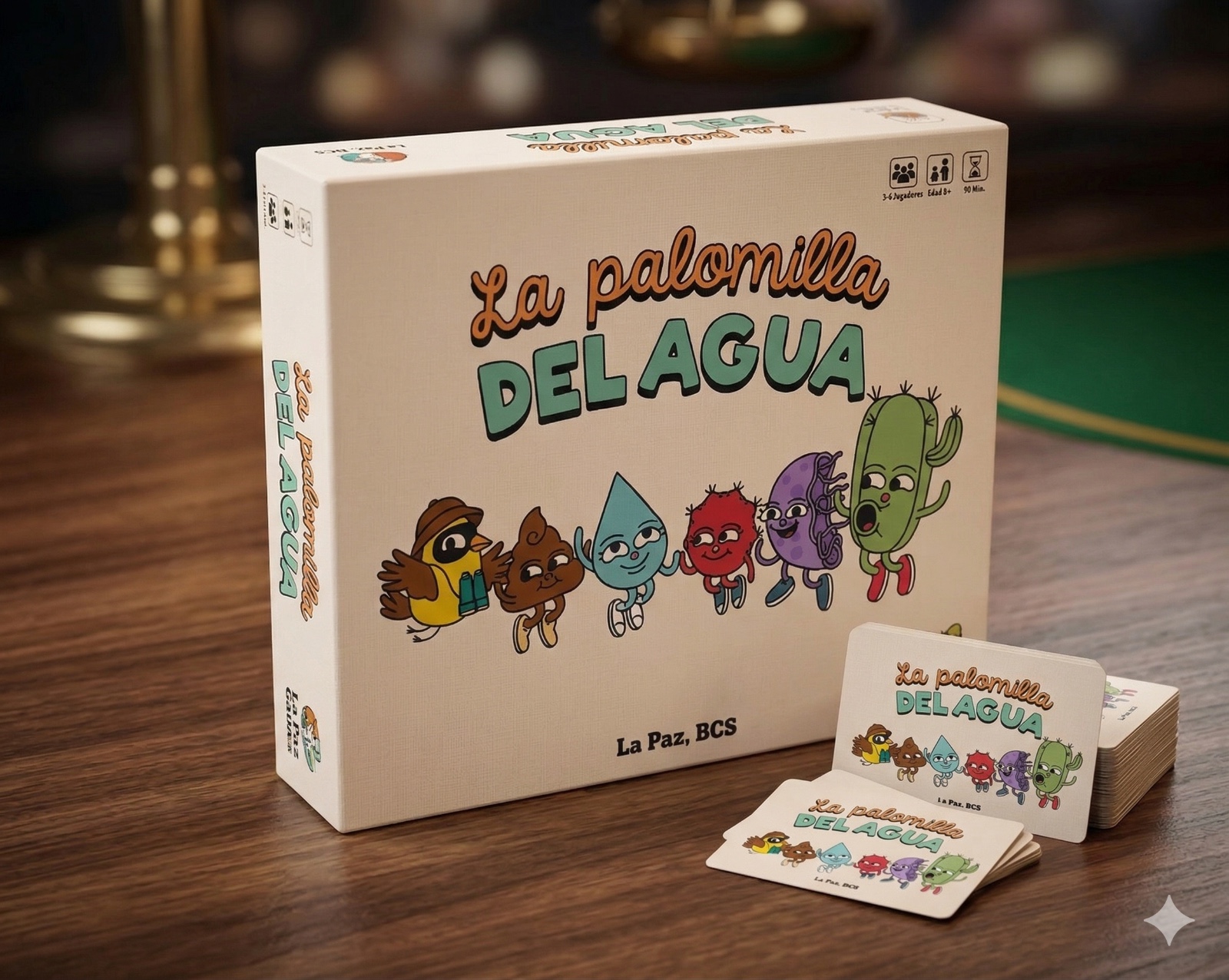
Niparajá's team has already been developing the first layer of this narrative. In 2025, La palomilla del agua was born — six characters with distinct personalities, designed to position water reuse in the everyday life and culture of La Paz. An animated series, communication materials, educational games, and a watershed physical model have already been produced. The objective is to make the characters familiar figures in La Paz — mirrors of perception and belief, speaking in humor and local warmth.
Skills I bring to this project
Visual storytelling and creative direction
Design and editorial production
Marine biology and integrated watershed science
Systems thinking and collaborative process design
Leadership and team management
Institutional management, fundraising and budgeting
Data analysis, databases, and financial administration
"The work documented in this portfolio is the foundation. The Storms We Need is what comes next. Climate change is making this work less optional, not more. La Paz's water future is being decided right now — not at some distant horizon."
La Paz.
La Paz sits at the tip of the Baja California Peninsula, a desert city facing the Sea of Cortez. With less than 200 millimeters of annual rainfall, it is one of the most arid urban centers in Mexico — and one of the fastest growing. Its entire water supply depends on a single underground aquifer, already in deficit, fed almost exclusively by the violent tropical storms that batter the coast every few years.
This is the central paradox of La Paz: the city needs the hurricanes. Without them, the aquifer does not recover. But when they arrive — as Hurricane Odile did in 2014, or Norma in 2023 — they leave behind collapsed infrastructure, flooded homes, damaged roads, and contaminated wells. The same water that sustains the city destroys it first. And in between storms, years of drought stretch the deficit further.
Climate change is tightening this bind. Storms are becoming more intense and less predictable. The windows between them are longer. Urban expansion continues to pave over the infiltration zones where rainwater once seeped slowly into the ground. A city that once lived in uneasy equilibrium with its environment is now racing against a clock it cannot see.
The work documented in this portfolio is a response to that urgency — built in the belief that the storm La Paz most needs right now is not meteorological.
The city
When the storms arrive
The cost
The infrastructure
Photos: Alejandro Rivas · AntFarm · Miguel Ángel de la Cueva · Descubre Baja California Sur · Cabo Adventures · Diario Sudcaliforniano / Ayuntamiento de La Paz · Alan Van Norman / eBird · Neto Cruz / Vive La Paz · Garret Cardwell / Superyacht Times